Most travel begins the same way.
We arrive somewhere new.
We look around.
We take photographs.
We film videos.
We visit the places we came to see.
We eat the local food, if we dare.
And then we move on.
There is nothing wrong with that. Observing is part of travel.
In many ways, it is how we begin to understand a place. We gather impressions. We decide what we like and what we don’t. We start building a picture of where we are.
But looking back on my time in Bali, some of my strongest memories came from moments when I stopped observing and started participating.
Not because I planned to.
And not because I was searching for a deeper experience.
In fact, none of those moments were booked through a travel agency or listed as highlights on an itinerary.
The shift happened gradually.
A ceremony I found myself taking part in rather than watching.
A ritual that mattered more once I stepped into it.
A moment when putting the camera away felt more important than recording what was happening.
The more time I spent in Bali, the more I began to notice a difference between visiting a place and participating in it.
And that difference changed the memories I brought home.
When Observation Stops Being Enough
When Observation Stops Being Enough
At first, I approached Bali the way I approach most new places.
Camera in hand.
Looking around.
Trying to understand what I was seeing.
Capturing moments I thought I might want to remember later.
There is nothing unusual about that.
Most travelers do the same thing.
The interesting part is that many of the moments I remember most were the ones I recorded the least.
The villagers gathering around the irrigation canals in Sidemen.
The silence of Nyepi.
The daily offerings placed outside homes and businesses.
The quiet beach and the tides on Nusa Lembongan.
The longer I stayed, the less interested I became in collecting experiences and the more interested I became in being present for them.
Somewhere along the way, observation stopped being enough.
More Than a Tourist Attraction
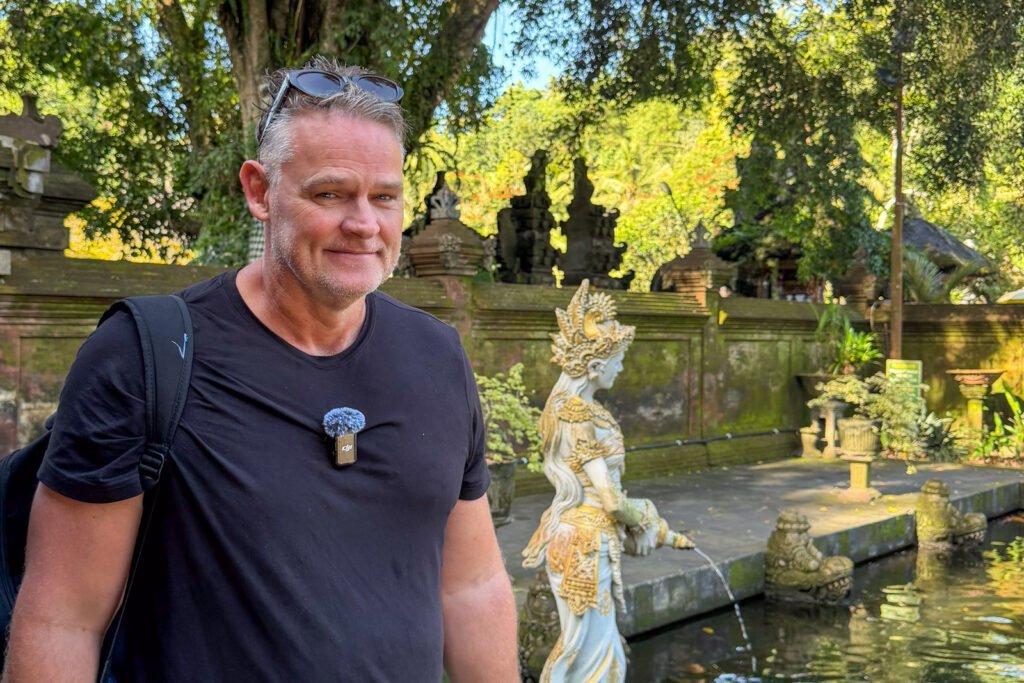
One of the places where I noticed this was Tirta Empul.
There is no denying that tourism plays a role there.
Visitors pay to participate in the cleansing ritual.
Guides explain the process.
Photographs are taken.
Large numbers of people move through the pools each day.
At times, it can feel highly organized around visitors.
And yet, there were moments that reminded me that this wasn’t simply a tourist attraction.
Certain water spouts were reserved for the deceased members of the local community. Visitors were asked not to use them.
When tourists ignored the instructions, it was clear that the monks found it frustrating and upset about it.
Not because a rule had been broken.
Because something meaningful had been misunderstood and maybe even disrespected.
That stayed with me.
Beneath the tourism was a ritual that still mattered to the people responsible for preserving it.
I participated in the ritual myself.
It was an interesting experience.
But what I remember most is not moving from one water spout to the next.
It was realizing that even places shaped by tourism can still hold something genuine underneath.
Tirta Empul became one of several experiences that changed how I viewed Bali during the trip.
Participating Without Choosing To
Nyepi taught me a different lesson.
Unlike Tirta Empul, there was no decision to participate.
If you are in Bali during Nyepi, you participate whether you planned to or not.
The contrast is remarkable. The energy and chaos of Ogoh-Ogoh the night before give way to a silence that feels almost impossible to imagine.
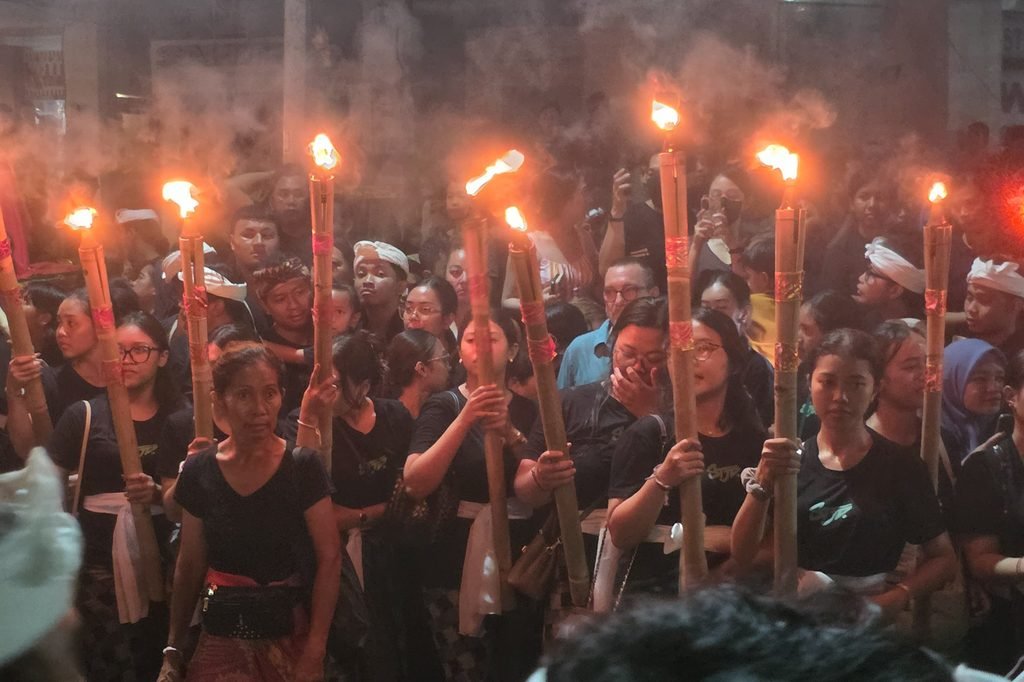
The streets become quiet.
Businesses close.
Traffic disappears.
The airport stops operating.
Even the internet becomes harder to access.
For twenty-four hours, the normal rhythm of life changes.
At first, it feels strange.
Especially if you arrive with the mindset of a traveler looking for things to do. Exploring. Eating out. Maybe having a couple of Bintangs at a local bar before calling it a night.
But as the day unfolded, I began to understand that the silence was the experience.
There was nothing to observe.
Nothing to photograph.
Nothing to chase.
Well, almost nothing.
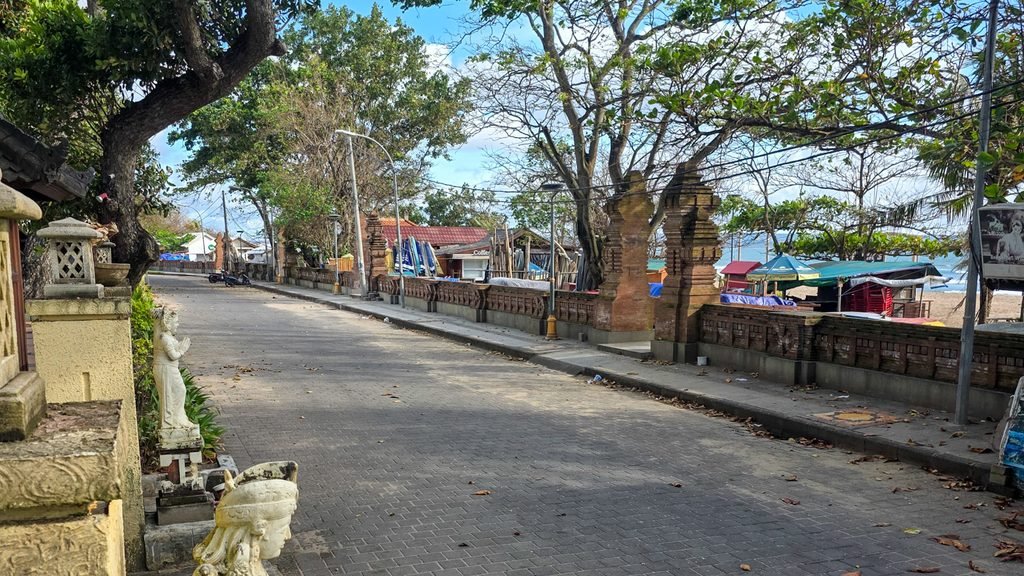
That night, I remember looking up and seeing a Milky Way far more visible than I expected. Without the usual lights, the sky suddenly felt much bigger.
The point was not to watch Nyepi happen.
The point was to live inside it.
Looking back, I think that is one of the reasons it stayed with me.
I wasn’t standing outside the event trying to understand it.
For a brief moment, I was experiencing the same silence as everyone around me.
Presence Over Documentation
The strongest example wasn’t a temple.
It wasn’t a ritual.
And it wasn’t something I paid to experience.
It happened one evening in Sidemen.
I was watching villagers gather around the irrigation canals that run through the rice fields.
Families washed after the day was over.
Children played in the water.
People talked.
Life unfolded at its own pace.
As a content creator, my first instinct is often to reach for the camera.
Capture the moment.
Record some footage.
Save it for later.
But standing there, something felt different.
The moment wasn’t happening for visitors.
It wasn’t happening for social media.
It wasn’t even happening for tourism.
It was simply part of everyday life.
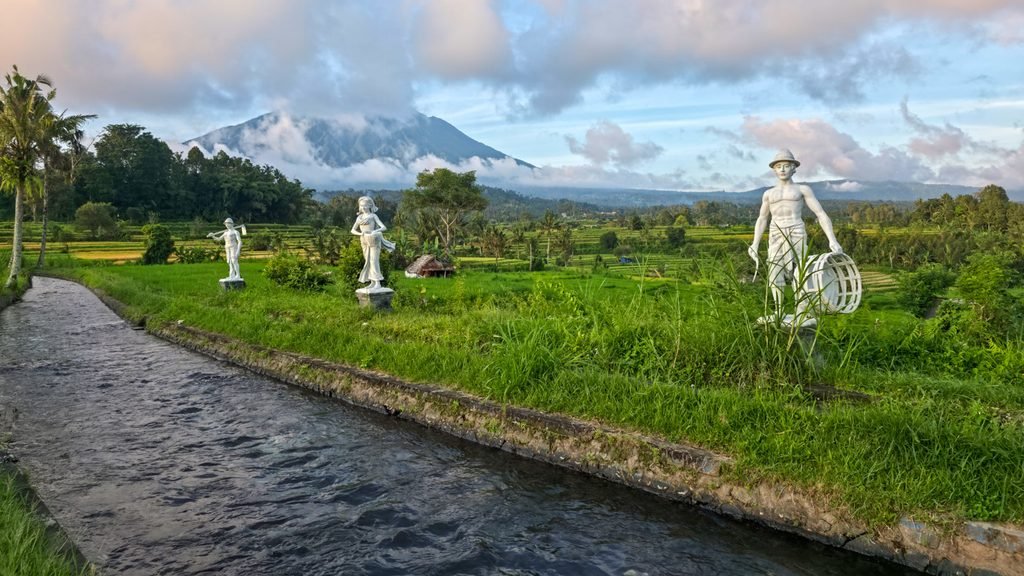
So I let the moment unfold.
And for once, that felt enough.
By the time I reached Sidemen, I had already seen people bathing in streams and small waterfalls around Bali.
What stood out wasn’t that people were bathing.
By then, I had seen that before.
What stood out was how ordinary it seemed.
Families gathered around the canals after the day was over.
People talked.
Children played.
Nobody appeared self-conscious.
It felt less like an event and more like part of the rhythm of daily life.
As someone raised in Western culture, I found that interesting.
We often talk about being liberated, yet we can carry a surprising amount of discomfort around the human body, aging, and even death.
My impression was that Bali approached some of these things differently.
Not because people were trying to make a statement.
But because they seemed more integrated into everyday life.
Looking back, I think that moment stayed with me because I wasn’t trying to turn it into content.
I wasn’t collecting it.
I wasn’t packaging it into a story.
I was simply present while it happened.
And strangely, that felt like a form of participation too.
Following the Rhythm of the Island
Nusa Lembongan offered a different kind of participation.
There was no ceremony.
No ritual. At least not one I was directly participating in. Unless you count the older women quietly refreshing the Canang Sari offerings each evening.
No moment where I consciously decided to become involved.
Instead, the island slowly changed the pace at which I was moving.
One of the things that struck me was how much life seemed connected to the tides.
In the morning and around midday, the water would push toward the shore. Waves rolled in. Some beachfront cafés occasionally found seawater washing across their floors.
By evening, everything seemed to change.
The tide would retreat.
The water became calmer.
The shoreline expanded.
The pace of the island seemed to slow with it.
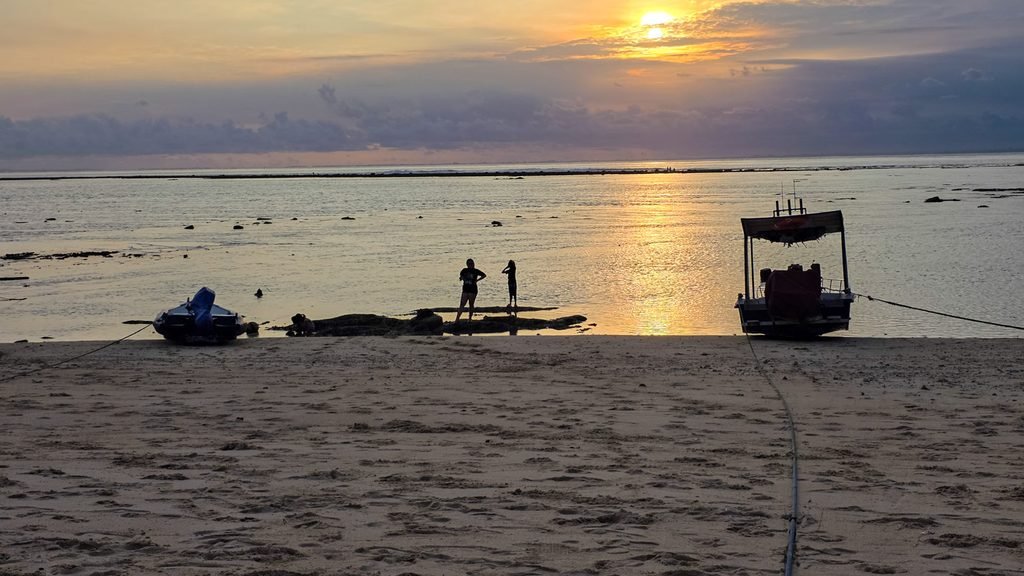
A couple of times, the tide dropped so low that locals headed out onto the exposed rocks and reef flats looking for shellfish, crabs, sea snails, and other seafood that had been hidden beneath the water only hours earlier.
It felt as though a different world briefly appeared before disappearing again.
The longer I stayed, the more I found myself paying attention to these rhythms.
The same thing happened when the internet disappeared for several hours one afternoon.
Normally, that might have frustrated me.
Especially as someone who works online.
On Lembongan, it somehow felt different.
The island carried on exactly as it always had.
And eventually, so did I.
The tides.
The ferries.
The changing character of the beaches throughout the day.
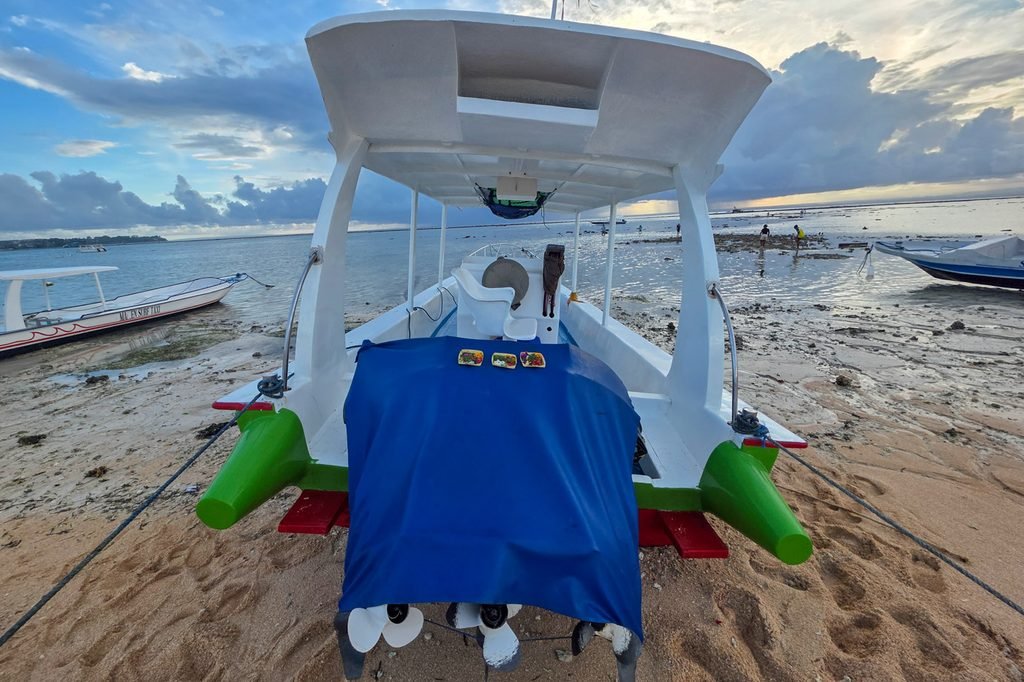
By late evening, much of the island seemed content to slow down and call it a day.
Looking back, I think I was participating in Lembongan without realizing it.
Not through a ritual.
But by gradually allowing the island’s pace to become my own.
Why Participation Creates Different Memories
Looking back, I don’t think it was a coincidence that these moments became some of my strongest memories from Bali.
They all had one thing in common.
I wasn’t simply observing them.
I was participating in them.
Sometimes that meant stepping into a ritual.
Sometimes it meant living inside a day of silence.
Sometimes it meant resisting the urge to reach for the camera.
And sometimes it meant allowing an island’s rhythm to become my own.
There is a difference between seeing something and experiencing it.
There is a difference between photographing something and participating in it.
And there is a difference between collecting a memory and living one.
Travel often encourages us to become observers.
We arrive somewhere new and immediately begin documenting it.
Photographs.
Videos.
Checklists.
Highlights.
Proof that we were there.
I understand the temptation. I do it myself.
But some of the experiences that stay with me the longest are the ones that were never fully collected at all.
They were simply lived.
Perhaps that is why I still remember the silence of Nyepi.
The villagers in Sidemen.
The feeling of moving through the purification ritual at Tirta Empul.
The tides of Nusa Lembongan.
Not because they were the most spectacular moments of the trip.
But because, for a little while, I stopped standing outside the experience and became part of it.
The Memories I Brought With Me
Most of us arrive somewhere new hoping to discover a place.
What I didn’t expect was that some of my strongest memories from Bali would come from moments when I stopped trying so hard to discover it.
The purification ritual at Tirta Empul.
The silence of Nyepi.
The villagers gathering around the irrigation canals in Sidemen.
The changing tides of Nusa Lembongan.
None of them were the biggest attractions of the trip.
None of them were moments I could fully capture with a camera.
And perhaps that is exactly why they stayed with me.
Looking back, I think there is a difference between visiting a place and participating in it.
Visiting allows us to see a destination.
Participation allows us to experience it.
That realization eventually led me to ask a broader question: Can you love a place without changing it?
The photographs help me remember where I was.
The moments of participation help me remember how it felt to be there.
And years from now, I suspect those are the memories that will remain the clearest.
Questions People Often Ask
What is the difference between visiting a place and participating in it?
For me, visiting is largely about observation. You see the sights, take photos, and move through a place as an outsider. Participation happens when you become part of what is happening around you, even briefly. Some of my most meaningful experiences in Bali came not from sightseeing but from participating in local traditions and everyday life.
Can tourists participate in Balinese traditions?
In some cases, yes. Many cultural and spiritual experiences in Bali welcome respectful visitors. The key is approaching them with curiosity and humility rather than treating them as attractions. Participation tends to be far more rewarding when the goal is understanding rather than collecting experiences.
What did Nyepi teach you about Bali?
Nyepi showed me a side of Bali that many visitors never experience. For twenty-four hours, the island slows down completely. There is no entertainment, no sightseeing, and very little movement. The experience highlighted how much of travel is usually focused on doing rather than simply being present.
Is Bali still authentic despite mass tourism?
I believe Bali remains deeply authentic, but that authenticity often exists beneath the tourism layer. It can be easy to focus on beach clubs, traffic, and social media hotspots. Yet many of the island’s traditions, ceremonies, and community practices remain very much alive for the people who live there. For a longer-stay perspective, I also explored which version of Bali works for digital nomads over 50.
Why do some travel experiences stay with us longer than others?
Looking back, the experiences I remember most are rarely the ones I photographed the most. The moments that stay with me are usually the ones where I participated rather than observed. Being involved creates a different kind of memory than simply watching from the sidelines.
What was the biggest lesson Bali taught you?
The biggest lesson was that there is a difference between seeing a place and experiencing it. Some of the most meaningful moments happen when you stop trying to consume a destination and allow yourself to participate in what is already happening around you.