Most digital nomads spend a lot of time searching for the perfect place.
Faster internet.
Better cafés.
More coworking spaces.
More restaurants.
More activities.
More options.
The assumption is usually the same.
More is better.
After spending a month on Nusa Lembongan, I started wondering if the opposite might sometimes be true.
What if a place becomes interesting because it offers less?
Not less in the sense of being uncomfortable.
Less in the sense of having fewer things competing for your attention.
Nusa Lembongan isn’t a digital nomad hotspot.
It doesn’t have endless coworking spaces.
There aren’t hundreds of cafés to choose from.
And the internet isn’t the fastest you’ll find in Southeast Asia.
The island is small enough that you can drive across much of it in a relatively short time.
And yet, by the time I left, I found myself thinking about returning.
Not because the island had everything.
Because it seemed to have enough.
Enough places to eat.
Enough internet to get work done.
Enough comfort to stay productive.
Enough distractions to keep life interesting.
But not so much that I felt constantly pulled in different directions.
That made me wonder whether Nusa Lembongan might be a surprisingly good fit for a certain type of digital nomad.
Especially those of us who are no longer chasing every possible experience.
What Is Nusa Lembongan Actually Like?
Nusa Lembongan sits just off the southeast coast of Bali.
Most visitors arrive by ferry from Sanur and stay for a few days before moving on.
The journey takes around 40 to 45 minutes.
At first glance, it feels like a smaller and quieter version of Bali.
There are beaches.
Surf breaks.
Snorkeling trips.
Small cafés.
Beachfront restaurants.
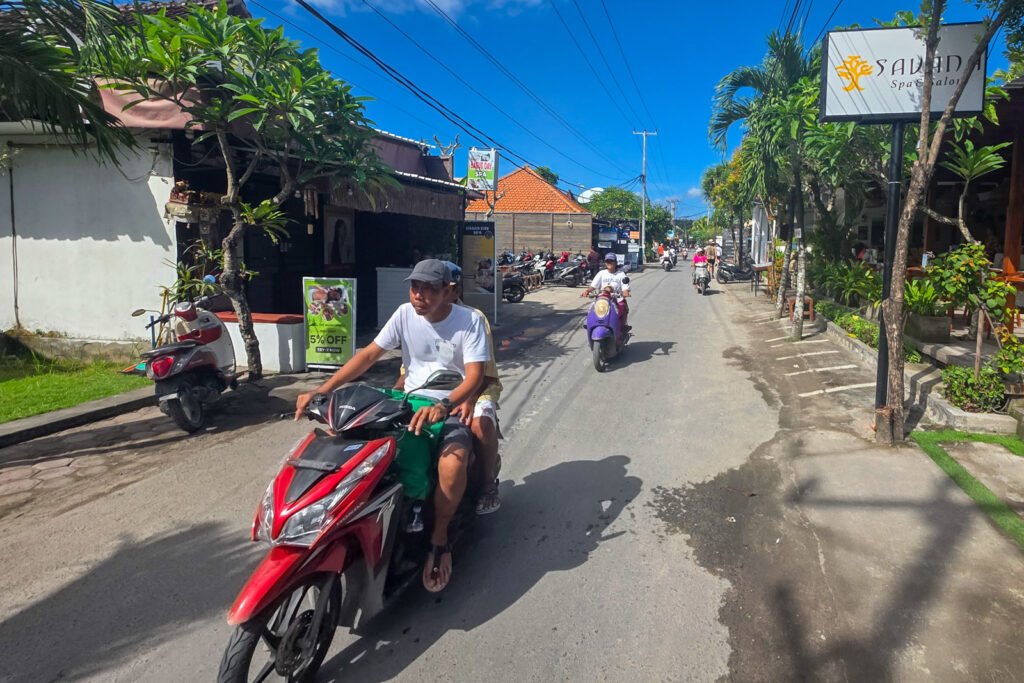
Scooters moving between villages.
And a surprising number of swimsuit stores.
Much of what people come to Bali looking for can be found here.
Just on a smaller scale.
What surprised me was how quickly the island’s rhythm began to feel different.
The roads were quieter.
The pace felt slower.
Life seemed less organized around getting somewhere quickly.
And even if you tried, the island had a way of slowing you down anyway.
A narrow road leading toward the beach.
A ferry arriving at its own pace.
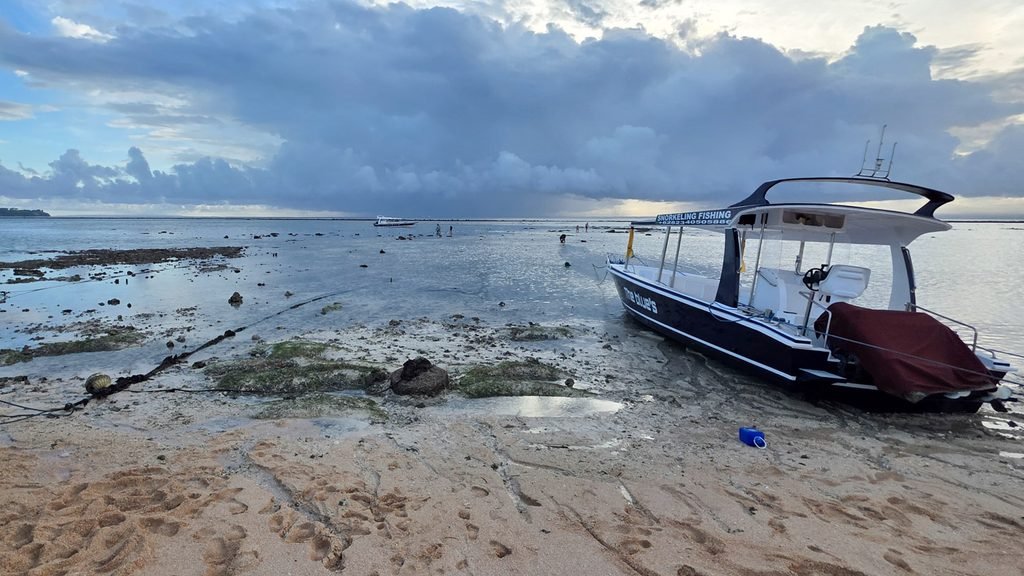
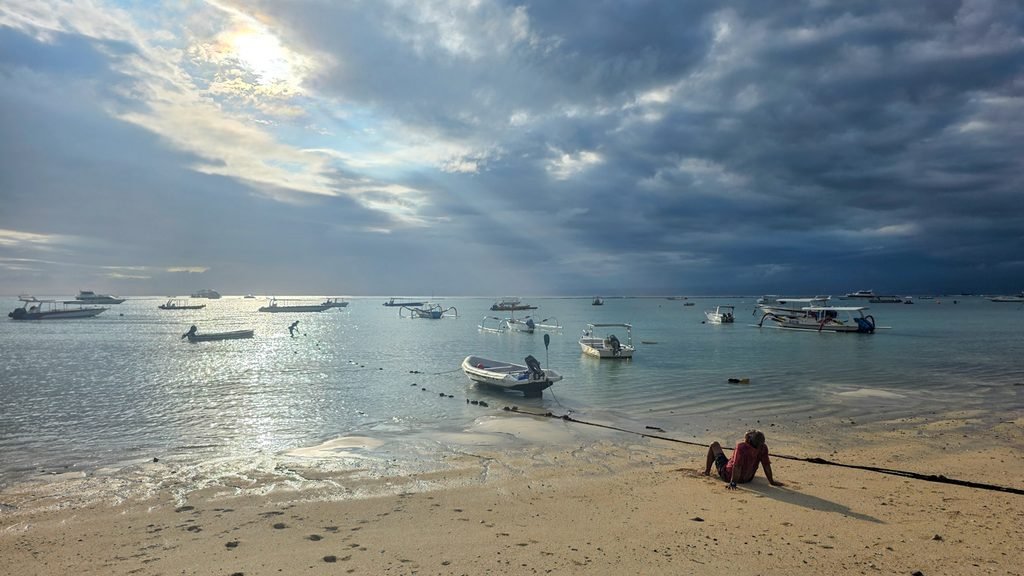
The changing tides quietly reshaping the shoreline throughout the day.
Those rhythms became one of the reasons I later wrote about why Nusa Lembongan felt different.
The island never felt isolated.
There were enough restaurants, convenience stores, gyms, and cafés to make daily life comfortable.
But there were fewer choices competing for my attention.
More importantly, they felt like the right choices.
After a while, I stopped thinking about what the island didn’t have and started appreciating what it did.
Space.
Time.
And a surprising absence of urgency.
That may not sound like much.
But for many digital nomads, it might be exactly what they’re looking for.
Who Will Love Nusa Lembongan?
I think Nusa Lembongan works best for a specific type of digital nomad.
Someone who is no longer looking for the biggest, busiest, or most exciting destination.
Someone who values quality of life more than constant stimulation.
Writers and researchers would probably enjoy it.
People working on creative projects would too.
The island gives you enough structure to remain productive while removing many of the distractions that tend to compete for your attention elsewhere.
I can easily imagine spending a month here writing a book, conducting research, building a website, or working on a project that requires deep focus.
It is also a place that suits people who enjoy routine.
Morning walks.
Coffee at the same café.
A favorite restaurant.
Watching the tide come and go.
There is a certain comfort in the island’s predictability.
The island doesn’t constantly demand your attention.
In many ways, it gives it back to you.
I also think Nusa Lembongan works particularly well for older digital nomads.
Not because nothing is happening.
There is.
But because the island feels less driven by the pressure to always be doing something.
Less pressure to network.
Less pressure to optimize every hour of the day.
Less pressure to keep up.
For some people, that might sound boring.
For others, it might sound like freedom.
Who Probably Won’t Enjoy Nusa Lembongan
As much as I enjoyed Nusa Lembongan, I don’t think it is for everyone.
If you thrive on constant variety, the island may start to feel limiting after a while.
There are only so many roads.
Only so many cafés.
Only so many restaurants.
And while new places occasionally appear, this is not the kind of destination where you spend months discovering something completely different every day.
People who enjoy large cities may struggle with the slower pace.
If your ideal day involves exploring new neighborhoods, visiting different coworking spaces, attending events, and constantly meeting new people, Lembongan may feel too quiet.
The same applies to digital nomads who rely heavily on fast infrastructure.
The internet is generally good enough for everyday work, but it isn’t the fastest you’ll find in Southeast Asia.
The island occasionally reminds you that you are living on a small island rather than in a major city.
Personally, I never found that frustrating.
But some people will.
I also wouldn’t recommend Lembongan to anyone looking for a highly social digital nomad scene.
You’ll meet travelers.
You’ll meet expats.
You’ll meet other remote workers.
But this isn’t Chiang Mai, Canggu, or Da Nang.
The social scene exists, but it isn’t the reason people come here.
In many ways, Nusa Lembongan rewards people who are comfortable spending time with their own thoughts.
For some, that sounds peaceful.
For others, it sounds like a reason to book a ferry back to Bali.
Can You Actually Work From Nusa Lembongan?
The short answer is yes.
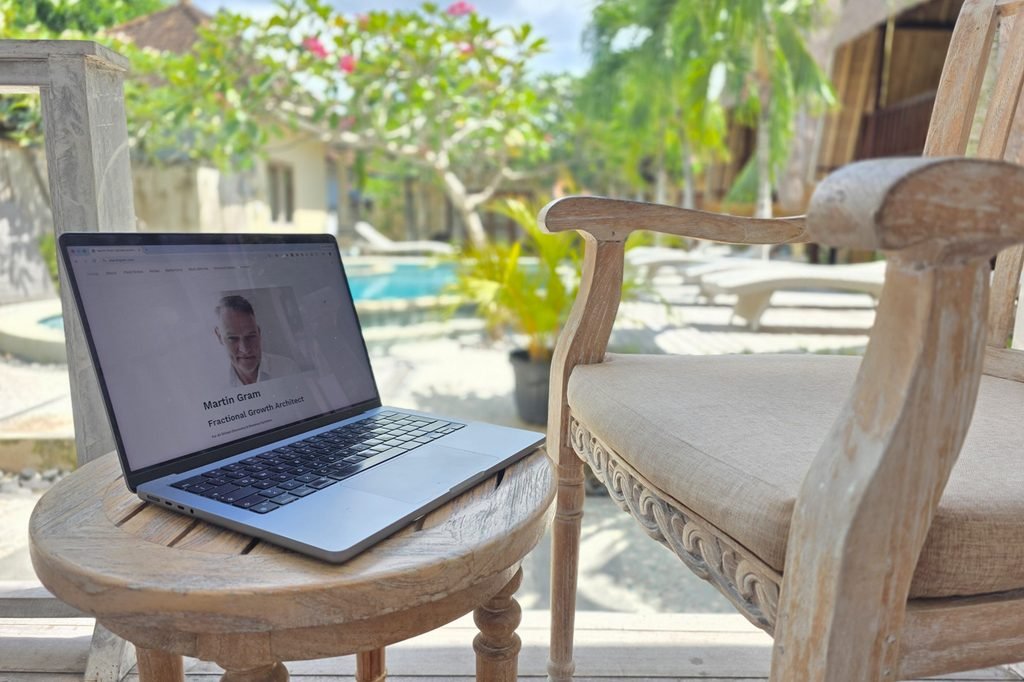
I worked throughout my stay on Nusa Lembongan without any major problems.
That said, the island occasionally reminds you that you’re living on a small island rather than in a major digital nomad hub.
One afternoon, the internet disappeared for several hours.
The explanation circulating the island was simple.
A rat had apparently chewed through the cable connecting Lembongan to Bali.
Whether that was actually true almost didn’t matter.
It was the kind of explanation that somehow felt perfectly suited to the island.
Back in places like Da Nang, a five-hour internet outage would immediately become a problem to solve.
People would be checking routers.
Contacting providers.
Looking for backup solutions.
On Lembongan, the reaction seemed different.
The internet would come back when it came back.
And eventually it did.
There were also occasions when the connection simply slowed down for a few minutes.
During Zoom calls, I would sometimes turn off my camera and continue with audio only until the connection stabilized again.
It was rarely a major issue.
Just another reminder that island life occasionally operates at its own pace.
The experience reminded me that working from Nusa Lembongan requires a slightly different mindset.
Much like some of the experiences I had elsewhere in Bali, the island seemed to work best when I adapted to it rather than expecting it to adapt to me. It’s a theme I explored further in What Bali Taught Me About Participation.
The island is capable of supporting remote work.
But it doesn’t always operate with the same predictability you might expect from larger cities.
For some people, that will be frustrating.
For others, it may be part of the appeal.
Daily Life on Nusa Lembongan
One of the things I appreciated about Nusa Lembongan was that daily life felt surprisingly easy.
The island is small, but it provides most of what you need.
There are convenience stores.
Small supermarkets.
Gyms.
Pharmacies.
Coffee shops.
Laundry services.
Scooter rentals
And plenty of places to eat.
You rarely need to travel far to take care of everyday errands.
At the same time, daily life occasionally reminded me that I wasn’t living in a highly optimized environment.
One thing I noticed was that some pharmacies and small shops didn’t always display prices on products.
Instead, the total would be calculated at the counter.
Occasionally, I found myself paying a slightly different amount for the exact same item on different days.
Not dramatically different.
Just different enough to notice.
At first, it felt unusual.
Later, it felt like another reminder that the island wasn’t trying to standardize every part of daily life.
The longer I stayed, the more I found myself noticing these small details. It reminded me of something I experienced earlier in Sidemen, where I wrote about what Sidemen taught me about paying attention.
The same applied to many other aspects of living on the island.
Things generally worked.
Just not always with the precision you might expect from a larger city.
Personally, I found that refreshing.
The island seemed less concerned with efficiency and more concerned with simply getting on with life.
And after a while, I found myself adapting to that mindset as well.
Is There a Digital Nomad Community?
One of the things I found interesting about Nusa Lembongan was that it didn’t seem to have a strong digital nomad community in the traditional sense.
At least not from what I experienced.
That doesn’t mean there aren’t remote workers on the island.
There are.
I regularly met travelers, expats, entrepreneurs, and people working online.
What felt different was how many of them already seemed connected before they arrived.
Friends visiting from Bali.
Couples spending a few days on the island.
Business partners taking a short break.
Remote workers escaping the busier parts of Bali for a weekend.
In many ways, Nusa Lembongan felt less like a place where people came to build a community and more like a place people visited with communities they already had.
That creates a different atmosphere.
The island feels social without necessarily feeling network-driven.
You can meet people.
You can have conversations.
You can make new connections.
You can go surfing with your buddies.
But I never got the impression that people came here primarily for the social scene.
Most seemed to be here for the island itself.
The Island Never Lets You Forget It’s an Island
One of the things I found fascinating about Nusa Lembongan was that the island never fully hides how it works. That became especially visible during a walk across the Yellow Bridge between Lembongan and Ceningan.
In many destinations, infrastructure operates quietly in the background.
Supplies arrive.
Buildings get constructed.
Restaurants stay stocked.
Most visitors never think much about how any of it happens.
On Nusa Lembongan, it was much harder to ignore.
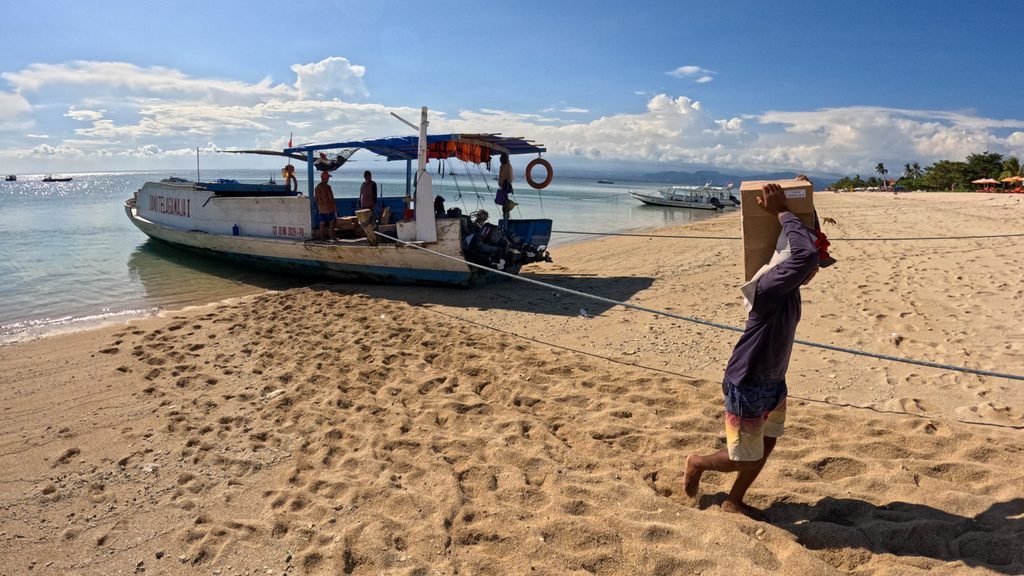
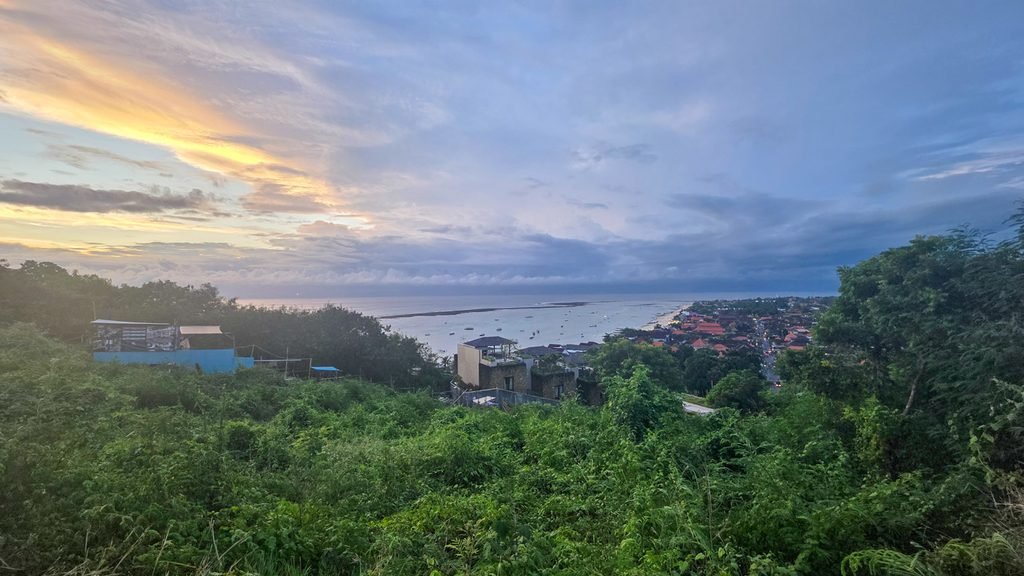
One thing I noticed was that Jungut Batu, the island’s main town, doesn’t have a large commercial pier or any piers for that matter.
People arrive by beach.
So do all the supplies that keep the island running.
I often watched freight boats arrive as the tide changed and unload directly onto the beach.
Cases of Bintang beer.
Building materials.
Food supplies.
Tiles.
Furniture.
Workers would spend hours carrying everything from the shoreline up to hotels, restaurants, convenience stores, and construction sites.
Back and forth.
Trip after trip.
Much of it done by hand.
The process seemed closely tied to the tides.
At certain times of day, sections of the beach became temporary logistics hubs.
The island’s supply chain unfolding in plain sight.
Most visitors probably don’t think much about where the food in the restaurants comes from.
Or how the materials for new hotels arrive.
On Lembongan, it was difficult not to notice.
The island constantly reminded me that everything had to cross the water first.
And somehow that awareness made daily life feel a little more connected to the realities of the place.
Perhaps that’s one of the reasons the island feels different.
It never fully separates you from the fact that you’re living on a small island.
Would I Stay on Nusa Lembongan Again?
Yes.
In fact, I can easily imagine returning again.
Not because Nusa Lembongan has everything.
Because it has enough.
That may sound like a strange compliment.
Especially in a world where most destinations compete by offering more.
More restaurants.
More attractions.
More nightlife.
More convenience.
More options.
Lembongan takes a different approach.
The island provides enough infrastructure to remain comfortable.
Enough internet to get work done.
Enough restaurants to keep life interesting.
Enough cafés to establish a routine.
Enough services to make daily life easy.
But not so much that you constantly feel pulled in different directions.
For me, that balance worked surprisingly well.
I could focus on work.
I could write.
I could think.
And at the same time, I never felt isolated from the world around me.
The island felt practical without becoming busy.
Simple without becoming boring.
And that combination is surprisingly difficult to find.
Would I live here permanently?
Probably not.
Part of what makes Nusa Lembongan special is that it still feels like an island escape.
Would I return for a month to work on a project, write, reflect, or simply slow down for a while?
Absolutely.
Lembongan also became part of a bigger question for me: what kind of Bali actually works for someone living and working remotely in their fifties? I explore that more broadly in Is Bali Good for Digital Nomads Over 50?
The island felt practical without becoming busy.
Simple without becoming boring.
And that combination is surprisingly difficult to find.
Final Thoughts
Most digital nomads spend a lot of time searching for the perfect place.
Faster internet.
More cafés.
More restaurants.
More opportunities.
More options.
After spending time on Nusa Lembongan, I’m not sure that’s always the right question.
The island certainly isn’t perfect.
The internet isn’t the fastest.
The infrastructure isn’t the most developed.
The social scene isn’t the largest.
And yet, those things never felt like the point.
What stayed with me was the feeling that the island had enough.
Enough comfort to make daily life easy.
Enough infrastructure to remain productive.
Enough activity to stay interesting.
But not so much that it constantly competed for my attention.
Perhaps that’s why Nusa Lembongan feels different.
Not because it offers more.
Because it quietly reminds you what enough feels like.