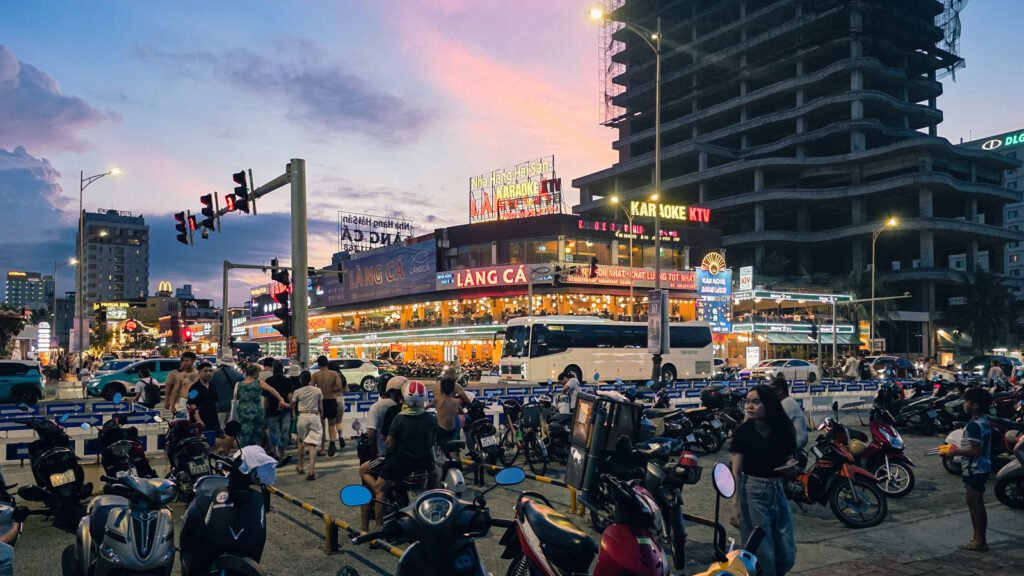
One of the things I enjoyed most about living in Da Nang was how easy everyday life became.
I stayed near My Khe Beach, with restaurants, coffee shops, convenience stores, and the beach all within walking distance. I didn’t need a car, and most days I didn’t even need to think about transportation.
If I wanted to go for a swim, I could walk down to the beach. If I was hungry, there were plenty of restaurants nearby, serving everything from Vietnamese food to Western dishes. And when I needed to work, I could simply return to my apartment.
That’s one of the things I appreciated about Da Nang. You don’t have to spend much time organizing your day around everyday necessities. Everything is nearby, and that makes it easy to combine working remotely with having a life outside work.
Da Nang is also relatively affordable. But I’m not particularly interested in seeing how cheaply I can live somewhere. I want a comfortable apartment, reliable internet, good food, and the freedom to enjoy the place I’m staying in.
Of course, what you consider comfortable and how much you’re willing to spend will be different from person to person.
In this article, I’ll go through what it costs to live in Da Nang, based on my own experience and the prices I paid, and what kind of lifestyle you can expect for your money.
Accommodation — Your Biggest Monthly Expense
Accommodation will probably be your biggest expense when living in Da Nang, and from my experience, prices have increased over the last couple of years.
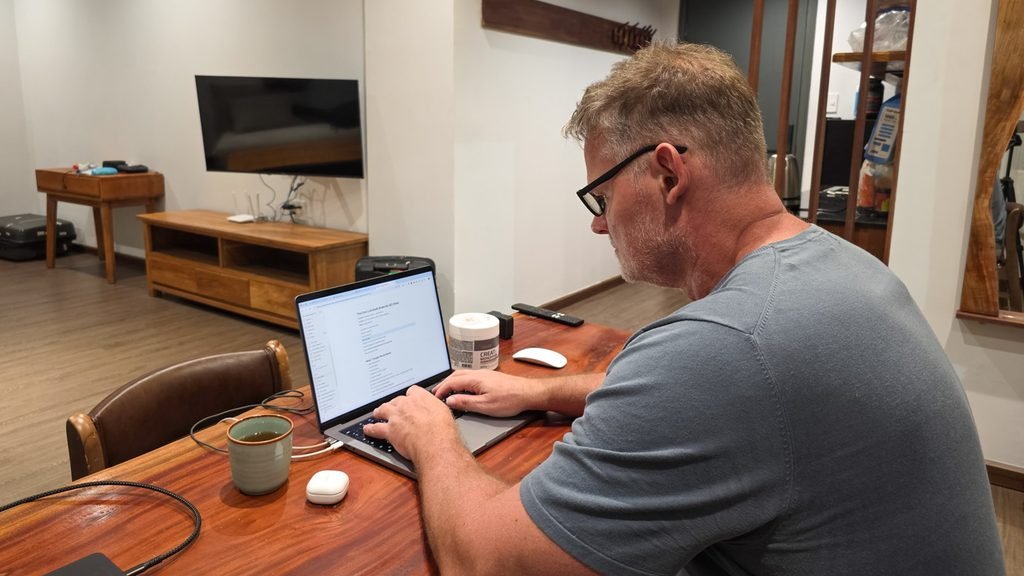
During my first longer stay near My Khe Beach, around December 2024 and January 2025, I paid 12,500,000 VND for 30 days in an apartment right in the heart of the area.
It had a kitchen and everything I needed for a comfortable stay. Restaurants, coffee shops, convenience stores, and the beach were all nearby. I didn’t need anything particularly luxurious, and the apartment worked well for everyday living.
About a year later, I paid 24,650,000 VND for another 30-day stay. That’s almost twice as much, although it wouldn’t be a fair comparison to say that prices had doubled. This was a much larger apartment, and the overall quality was better.
On my latest visit, I stayed right on An Thuong 34, which I found to be a very good location. I paid 21,698,204 VND for 21 days, before moving into a smaller apartment for another five days at 4,880,000 VND.
That visit was during high season, around the time of the annual Da Nang International Fireworks Festival, when accommodation was in particularly high demand. So the price also needs to be seen in that context.
Looking at what I’ve paid over several visits, accommodation has certainly become a more significant part of my Da Nang budget.
But there’s also a difference between staying somewhere for a few weeks and renting an apartment for several months. My prices reflect shorter stays, mostly booked for around a month, rather than long-term rental contracts.
For me, location is important. I want to be able to walk to restaurants, get groceries, and go down to the beach without having to arrange transportation every time I leave the apartment.
And since I work remotely, the apartment needs to be somewhere I actually enjoy spending time. It’s not simply a place to sleep.
You can probably find something cheaper by moving further away from the beach or choosing a more basic apartment. But I’d rather pay a little more to stay somewhere that makes everyday life easier.
Food — Eating Out Versus Cooking at Home
One of the advantages of living around My Khe Beach is the number of restaurants and small Vietnamese eateries within walking distance.
I mostly eat Vietnamese food when I’m in Da Nang. For breakfast or lunch, I would typically spend somewhere between 50,000 and 100,000 VND for a meal, including something to drink.
Dinner would usually cost me between 150,000 and 250,000 VND, depending on where I went and what I ordered.
A couple of times a week, I might grab a banh mi sandwich for around 25,000–35,000 VND. Add a smoothie for another 45,000–50,000 VND, and you have a simple, inexpensive meal.

Of course, I don’t eat Vietnamese food every day.
Occasionally, I would have a burger, normally spending between 180,000 and 300,000 VND, including a drink.
I also remember paying 450,000 VND for a Mexican burrito at a place that looked more like a fast-food restaurant than anything particularly special. That was certainly one of my more expensive burritos in Vietnam.
If you’re looking for something a little more upscale, perhaps a good seafood restaurant near the beach, Vietnamese food, or Western dining, I would expect to spend somewhere between 450,000 and 1,500,000 VND for two people, based on my own visits.
A beer could cost anything from 35,000 to 100,000 VND, depending on the place and what you ordered.
What I like about Da Nang is that you have all these options close to where you live. You can eat inexpensively at a small local restaurant one evening and spend considerably more on a nice dinner the next.
Buying Groceries and Cooking at Home
I did cook at home occasionally, although I probably ate out more often.
When you’re cooking for one person, you also have to consider how much food you end up throwing away. Ingredients expire, you don’t always use everything you buy, and suddenly the savings aren’t quite as impressive as you might expect.
There are supermarkets such as WinMart where you can do your grocery shopping, but getting there sometimes meant taking a Grab, spending time walking around a busy supermarket, and then getting everything back to the apartment.
It wasn’t always worth the effort.
Instead, I would often visit one of the Full Market convenience stores, many of which are open 24 hours a day, or Moonmilk.
They can be more expensive than supermarkets, but they’re conveniently located and still relatively inexpensive compared with what I’m used to paying in Western countries.
Sometimes paying a little more for groceries is worth it simply because you don’t have to spend so much time getting them.
Shopping at Bac My An Market
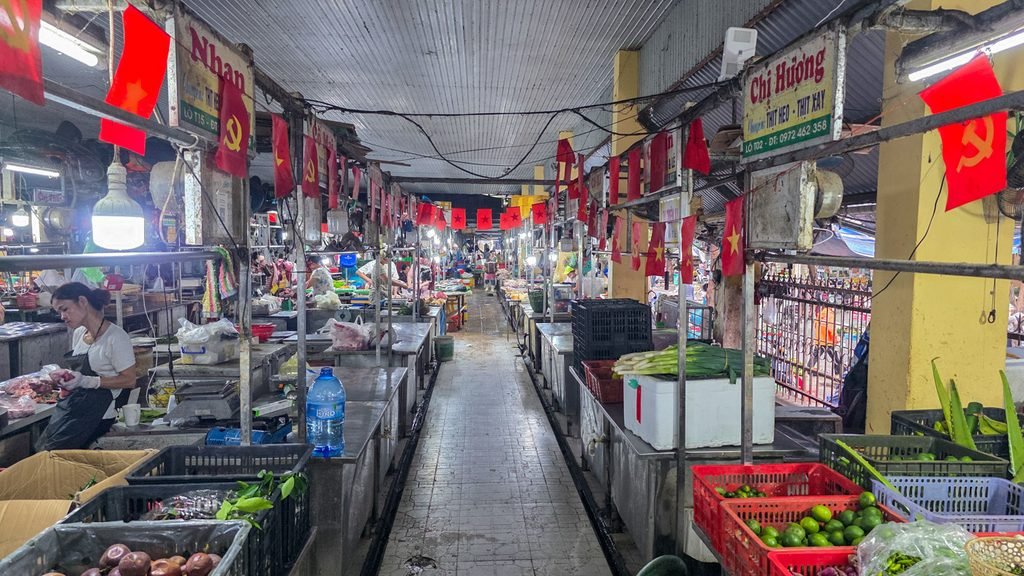
Another place I visited for groceries was Bac My An Market.
Here you can buy vegetables, fruit, fish, shrimp, clams, and meat. It’s a very different shopping experience from going to a modern supermarket.
The meat is displayed openly, sometimes hanging from hooks inside the market building. There’s no refrigeration at the stalls I’ve used, and the temperature inside can become extremely hot.
I would normally buy meat from the same butcher, a friendly Vietnamese lady whose stall I had come to trust.
I’ve never had problems with food poisoning or an upset stomach after eating meat bought from her. But that doesn’t mean there isn’t a risk.
In fact, I wouldn’t recommend buying unrefrigerated meat from stalls like these. High temperatures and a lack of refrigeration create obvious food safety concerns, and cooking meat thoroughly doesn’t necessarily eliminate every risk associated with improper storage.
It’s simply something I’ve done myself, with an understanding that there are risks involved.
As for prices, I remember paying somewhere around 100,000–200,000 VND for half a kilogram of meat, depending on the type and cut, although I can’t remember the exact amounts.
Fish, shrimp, and clams were also available, with prices depending on the type and quantity.
One thing I enjoy about shopping at local markets is that you get to see a little more of everyday Vietnamese life. It’s not quite the same experience as walking through a supermarket.
Something I particularly liked about Bac My An Market was that many of the vendors remembered me, even when I hadn’t visited for a couple of months.
Coffee and Drinks
Coffee is another small expense that can add up over a month, especially if you enjoy visiting coffee shops.
I would often have a Vietnamese salted coffee or coconut coffee, usually paying somewhere between 35,000 and 55,000 VND.
And with so many coffee shops around My Khe Beach and An Thuong, it’s easy to make stopping for a coffee part of your daily routine.
How Much Should You Budget for Food?
Based on my own spending, I would normally allow around 50,000–100,000 VND for breakfast or lunch and another 150,000–250,000 VND for dinner.
That doesn’t mean I spent exactly that amount every day. Sometimes I would cook, have a banh mi, or spend considerably more on a restaurant meal.
But it gives you an idea of what eating out regularly can cost without having to limit yourself to the cheapest places.
For me, one of the advantages of Da Nang is that cooking becomes a choice rather than a necessity.
You can prepare your own meals when you feel like it, but there are enough affordable places nearby that you don’t have to spend much of your day shopping, cooking, and cleaning up afterward.
Transportation — Living Without a Car
One of the things I appreciated about living near My Khe Beach was that I rarely needed transportation.
Most of what I needed was within walking distance. Restaurants, coffee shops, convenience stores, and the beach were all nearby. I could go out for something to eat, pick up groceries, or go for a swim without having to think about how to get there.
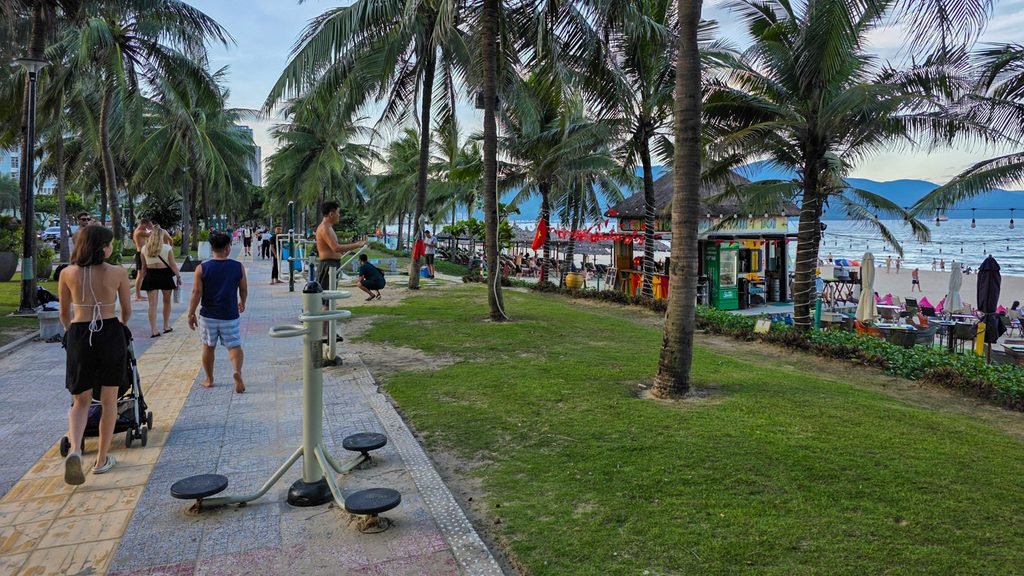
And walking around My Khe Beach and An Thuong is actually quite pleasant. There’s often a nice breeze coming in from the sea, and somewhere in the background, you’ll hear the familiar calls of the bánh bao sellers making their way through the streets.
Even Bac My An Market, which is a little further away, is worth walking to. There are some good coffee shops along the way if you feel like stopping.
Getting Around With Grab
Whenever I needed to go somewhere further away, I usually ordered a Grab car.
I used Grab to visit shopping malls such as Vincom Plaza, occasionally for a Thai buffet, or to visit Son Tra Night Market, somewhere I tend to return to whenever I’m in Da Nang.
I also used Grab for trips to Ba Na Hills, Hoi An, the Lady Buddha statue, and, of course, getting to and from the airport.
For shorter trips around the city, I would normally pay somewhere around 50,000 VND.
One Saturday evening during the Da Nang International Fireworks Festival, I paid 142,000 VND for a six-kilometer ride to a location near the fireworks. Traffic was particularly busy that evening, so the higher fare wasn’t surprising.
For longer trips, I remember paying somewhere around 300,000–350,000 VND for a Grab car from Da Nang to Hoi An. That’s quite reasonable for a journey of roughly 30 kilometers, especially if you’re traveling with someone and can share the cost.
Those are the fares I remember paying, not necessarily what you’ll pay today. Prices vary with traffic, demand, and the pickup and drop-off locations.
But for the amount I used it, I never felt that transportation was a particularly significant expense.
Do You Need to Rent a Scooter?
I never rented a scooter during my stays in Da Nang. I simply didn’t feel the need.
Scooter rentals are easy to find, including at some hotels and apartment buildings. From what I’ve seen, daily prices are generally around 100,000–250,000 VND, depending on the scooter.
On one occasion, I was offered a scooter for 100,000 VND per day without a deposit because I was staying at the hotel.
But if you’re considering renting one, I’d recommend having some experience riding scooters before arriving in Vietnam.
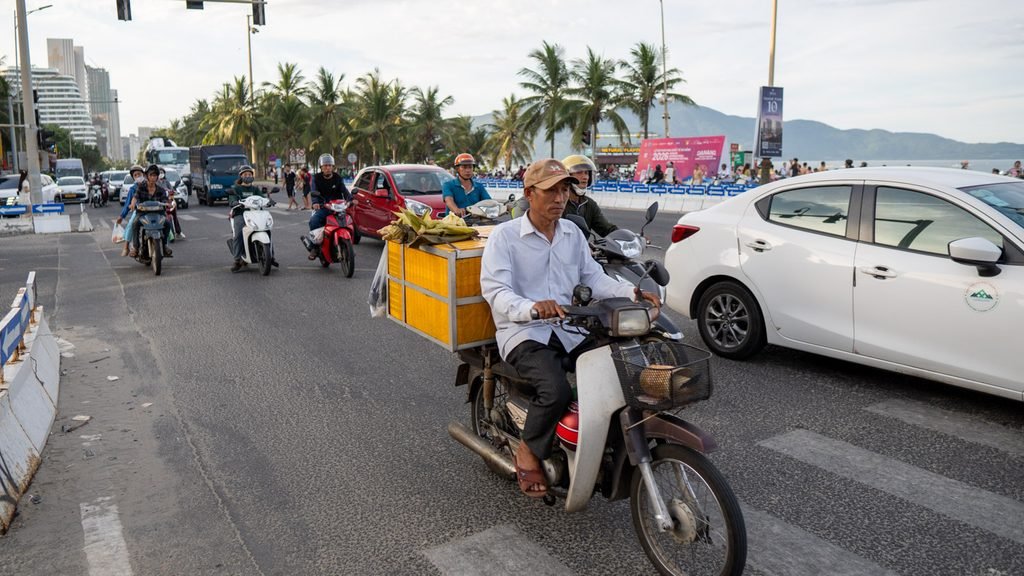
Traffic here takes some getting used to. There are scooters everywhere, and drivers don’t always behave the way you might expect if you’re accustomed to European traffic.
I’ve seen a few accidents during my visits, several involving tourists.
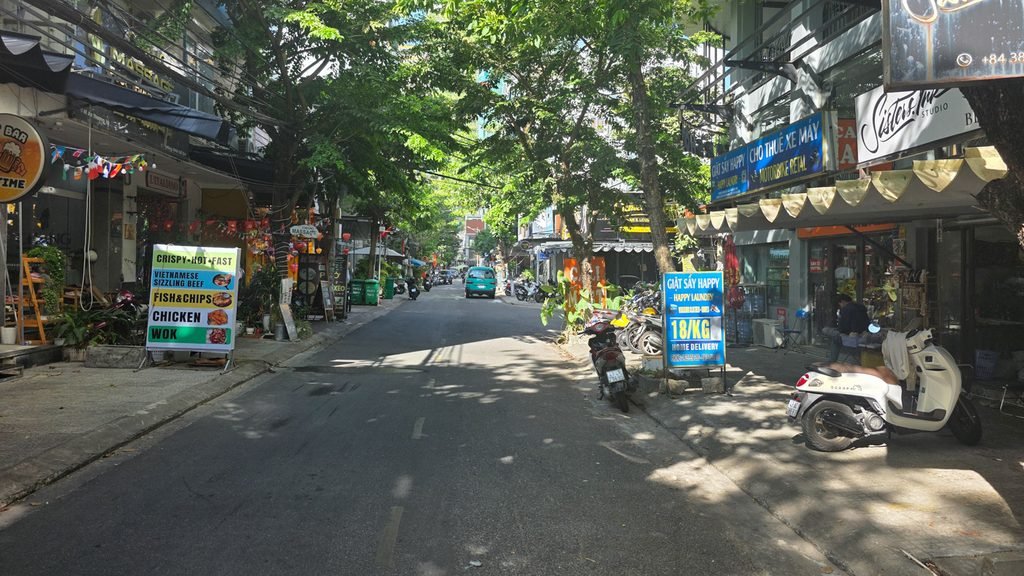
You’ll also notice that scooters are frequently parked on sidewalks, which sometimes means pedestrians have to walk around them or step onto the road.
And make sure you have the appropriate driving license and insurance coverage. Being offered a scooter by a hotel or rental shop doesn’t necessarily mean you’re legally permitted or insured to ride it.
Walking Around My Khe Beach and An Thuong
Despite the traffic, I would still recommend walking around My Khe Beach and An Thuong.
Everything you need for everyday living is relatively close, and I find walking one of the better ways to get familiar with a neighborhood.
There are a few things to get used to, though.
Traffic can become quite busy, particularly around the roundabout near the beach. Crossing the road sometimes requires a little patience and paying attention to what’s happening around you.
You’ll also hear a lot of honking.
In Vietnam, the horn isn’t necessarily used because somebody is angry with you or thinks you’ve done something wrong.
Often, it’s simply a way of letting other road users know that someone is coming through or approaching from behind.
It’s part of the traffic environment, and after a while, you start getting used to it.
How Much Should You Budget for Transportation?
Transportation is one of those expenses that depends heavily on where you choose to live and how often you want to explore.
If you’re staying around My Khe Beach or An Thuong, you might find that you rarely need anything more than the occasional Grab ride.
If you regularly visit other neighborhoods, shopping malls, or attractions outside Da Nang, you’ll naturally spend more.
I never felt the need to rent a scooter, and using Grab worked well for me.
For everyday life, the biggest advantage was simply being able to walk most places.
I didn’t have to organize transportation to get something to eat, go shopping, or spend some time at the beach. And that made living in Da Nang particularly convenient.
Working Remotely — Internet, Cafés, and Everyday Infrastructure
Internet and Mobile Data
Internet connectivity has never really been a problem for me in Da Nang.
During my first couple of visits, I was using 4G mobile internet. Since then, 5G has become available, and I’ve noticed an improvement in mobile connectivity.
The apartment Wi-Fi has also been good everywhere I’ve stayed. On my first longer visit, I remember getting speeds above 100 Mbps. During my more recent stays, I’ve generally seen speeds somewhere between 300 and 500 Mbps.
I’ve experienced very few interruptions, and video calls have never been a problem. My mobile connection has been reliable too.
For someone working remotely, that’s a big advantage. You don’t want to spend your day worrying about whether the internet will work, especially when you have meetings or deadlines.
Buying a SIM Card in Vietnam
I usually fly directly from Thailand to Da Nang. But on some trips, I’ve arrived through other Vietnamese airports.
On my last visit, I was traveling from Singapore and had a stopover in Ho Chi Minh City, where I bought a local SIM card before continuing to Da Nang.
I’ve paid anywhere from 250,000 to 350,000 VND for a monthly data package, depending on where I bought it.
The problem with buying SIM cards at airports is that you’re often tired when you arrive.
After a long flight, spending two hours in the immigration queue, and finally collecting your luggage, the last thing you want to do is spend another half hour comparing mobile data packages.
You just want a working SIM card and to get on with your journey.
I suspect that’s what happened when I paid 350,000 VND for a package advertised as unlimited data for 30 days.
There are plenty of SIM-card sellers at airports, but I’d recommend paying attention to what you’re actually buying.
I’ve experienced vendors adding an unexpected fee of around 100,000 VND when it was time to pay.
I also had an experience in Hanoi where I bought a SIM card that was supposed to last 30 days, only to find that it stopped working after five.
I don’t know exactly what happened. It may have been a problem with the activation, the package itself, or a SIM that had already been activated before I bought it.
Selling pre-registered SIM cards has been a documented problem in Vietnam, so it’s worth being a little careful about where you buy one.
I’ve also encountered accommodation staff offering SIM cards, sometimes apparently already activated. I can’t say whether there was anything wrong with those arrangements, but I prefer knowing exactly what package I’m getting and how long it will remain active.
My advice is to use an official mobile operator or authorized dealer whenever possible. Check the price, data allowance, activation date, and expiration date before leaving the counter.
And don’t assume that unlimited data necessarily means unlimited high-speed internet.
For me, mobile data has generally been inexpensive and reliable in Vietnam. It’s just the buying process that occasionally requires a little extra attention.
Working From Your Apartment or Coffee Shops
Most of the time, I’ve worked from my apartment when staying in Da Nang.
That’s probably more about my working habits than anything else.
I usually start the morning by opening my laptop while having my coffee, just to catch up on a few things. Before I know it, I’ve been sitting there working for a couple of hours.
I guess I simply prefer working from my apartment. It’s convenient, I have everything I need, and I can concentrate without too many distractions.
One thing I would recommend checking before booking an apartment is whether there’s somewhere comfortable to work.
I’ve never rented an apartment in Da Nang with a proper dedicated workspace and office chair. Usually, I’ve made do with a kitchen or dining table.
It’s not necessarily a problem, but if you’re planning to work several hours a day, it’s worth paying attention to.
What About Coffee Shops and Coworking Spaces?

There are plenty of coffee shops around My Khe Beach and An Thuong where you can sit with your laptop.
And you won’t necessarily find all the good ones by searching Google Maps.
On my last visit, I actually went looking for a café where I could get some work done. I tried finding some of the most recommended places, but eventually gave up. They were simply too busy and noisy for my liking.
I know some digital nomads enjoy working in places where there are plenty of other people around. Personally, I prefer somewhere a little quieter.
Da Nang also has dedicated coworking spaces, including HIVE in the An Thuong area. I’ve never worked there myself, so I can’t say much about the experience.
Another option is HI4 Coffee & Workspace, which has two locations in Da Nang, including one on Mai Thuc Lan near An Thuong. It’s open 24 hours and combines a café with dedicated areas for working. I noticed it during my stay but haven’t worked there myself.
For me, coffee shops have mostly been places to take a break from work rather than somewhere I go specifically to work.
I enjoy going out for a salted coffee or a coconut coffee, watching what’s happening around me, and then heading back to my apartment.
I don’t particularly feel the need to sit in a room full of other people working on their laptops.
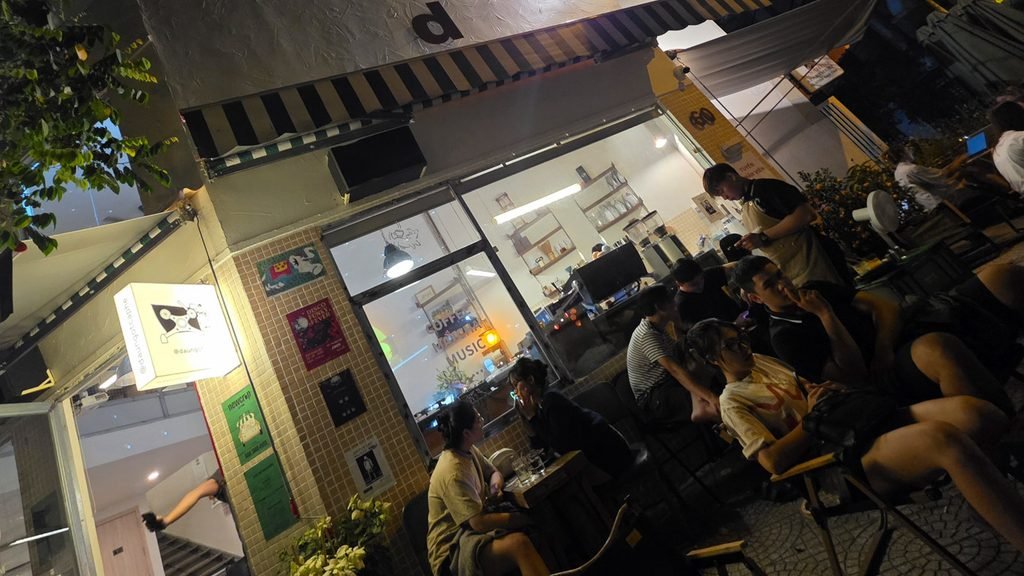
But that’s a personal preference, and Da Nang certainly has options if you prefer working outside your accommodation.
Electricity, Air Conditioning, and Everyday Comfort
Electricity has always been included in the price of the apartments I’ve rented in Da Nang, so I’ve never had to pay a separate electricity bill.
That makes budgeting a little easier, particularly during the hotter months when you’re using air conditioning regularly.
One thing worth knowing, though, is that power outages do happen.
During my first couple of stays in Da Nang, I don’t remember experiencing any significant problems with the electricity.
But over my more recent visits, I’ve noticed interruptions becoming a little more frequent.
On two occasions, I experienced scheduled power outages lasting almost the entire day, from around six in the morning until approximately seven in the evening.
That’s quite a long time to be without electricity, particularly if you’re planning to spend the day working from your apartment.
I’ve also experienced shorter outages, including a few that seemed to affect only the apartment building where I was staying.
Fortunately, those were usually resolved quite quickly.
I’ve heard different explanations for the outages, including equipment problems and increased electricity demand, but I don’t know what caused the particular interruptions I experienced.
Apart from those two full-day outages, electricity hasn’t been a major problem for me in Da Nang.
Still, if you’re working remotely, it’s something worth being aware of. Especially if you have online meetings or deadlines that you can’t easily reschedule.
Before booking an apartment, I’d also recommend checking whether electricity is included in the rental price. It always has been for me, but that doesn’t mean every property follows the same arrangement.
Healthcare, Fitness, and Personal Expenses
When looking at the cost of living in Da Nang, there are a few other expenses worth considering beyond accommodation, food, and transportation.
Things like gym memberships, laundry, haircuts, and occasionally buying something you need.
None of these has been particularly expensive for me in Da Nang, although it naturally depends on where you go and what you’re looking for.
Fitness and Staying Active
During my stays near My Khe Beach, I’ve used Pig Gym, located right in the middle of the area.
It’s not the biggest gym, and the equipment isn’t the newest either. But it has what I need to get my workouts done.

I paid 100,000 VND for a single session, while a monthly membership was 550,000 VND.
One thing worth knowing is that there’s no air conditioning. If you go there around midday, it can get pretty hot while working out.
In the late afternoon, you’ll often find quite a few foreigners training there. I imagine mornings are popular as well, although I haven’t spent much time there at that hour.
There are other gyms around My Khe Beach and An Thuong.
One alternative is TamTay Gym in An Thuong. It’s a little smaller, but air-conditioned. A day pass costs 150,000 VND, while the current advertised monthly membership is 1,500,000 VND.
You’ll also find smaller local gyms around the area, along with personal training studios, Pilates, and other fitness facilities.
And, of course, there’s the beach.
You can go for a swim, take a walk, or exercise along the beachfront without spending anything.
For me, having access to a gym and the beach within walking distance makes it fairly easy to keep up with my exercise routine.
Healthcare and Pharmacies
Fortunately, I’ve never needed to visit a doctor during my stays in Da Nang. Knock on wood.
There are plenty of pharmacies around My Khe Beach and An Thuong, and I’ve found them convenient when looking for medication or advice about common health problems.
One thing I appreciate is being able to speak with pharmacy staff about relatively minor issues, such as a cold or allergies, without necessarily having to visit a doctor first.
Of course, there’s a difference between buying over-the-counter medication and needing prescription medicine. Some medications require a valid prescription, and a pharmacy shouldn’t be treated as a substitute for medical care when you’re seriously ill.
I can’t personally comment on the quality or cost of hospitals and medical consultations in Da Nang because I haven’t needed those services.
But if you’re planning to live here for an extended period, it’s something worth researching, particularly regarding health insurance and which facilities are covered.
Laundry Services
Laundry is one of those small expenses that I’ve never had much reason to worry about in Da Nang.
There are plenty of laundry services around My Khe Beach and An Thuong.
I usually paid around 20,000 VND per kilogram at a small local laundry run by a lovely older lady.
The service was excellent.
Quite often, I could drop off my clothes and pick them up again the same day without paying anything extra.
Sometimes I would bring my laundry around four in the afternoon and have it ready by seven or eight that evening.
At those prices, I never felt much need to wash everything myself.
Haircuts and the Unexpected Extras
A haircut would normally cost me somewhere between 100,000 and 150,000 VND.
Sometimes I would also have my ears cleaned, bringing the total to around 200,000 VND.
Ear cleaning is a service you’ll encounter at some Vietnamese barbershops. They use a strong light and small instruments to remove earwax.
It’s worth mentioning that this isn’t something I would recommend. Having instruments inserted into your ear canal comes with risks, particularly if the person performing the procedure isn’t medically trained.
But the first time I visited a barber in Da Nang, I had a slightly unexpected experience.
After getting my haircut, I was invited over to the hair-washing area.
A young woman appeared and started washing my hair, followed by a massage using hot stones.
I think I ended up paying around 250,000 VND for the whole experience.
It wasn’t particularly expensive, but I hadn’t realized those extra services were being added.
So here’s a small piece of advice: if you’re offered a hair wash or massage after your haircut, check whether it’s included in the price.
Otherwise, you might find yourself halfway through a treatment wondering how much it’s going to cost.
Shopping and Other Personal Expenses
Shopping hasn’t been a particularly big expense for me in Da Nang.
Partly because I don’t buy very much, but also because I’ve found it surprisingly difficult to find clothes that fit me.
I’ve occasionally bought rubber sandals, usually paying around 100,000–150,000 VND for a pair.
Sometimes I’ll pick up a wallet or something small at Son Tra Night Market.
But overall, Da Nang isn’t somewhere I’ve felt particularly tempted to go on major shopping trips.
There are shopping malls and clothing stores, of course, but I haven’t found the selection particularly interesting for what I need.
So apart from the occasional practical purchase, shopping has never taken up much of my budget.
| Expense | Cost (VND) |
|---|---|
| Pig Gym — single session | 100,000 |
| Pig Gym — monthly membership | 550,000 |
| TamTay Gym — day pass | 150,000 |
| TamTay Gym — monthly membership | 1,500,000 |
| Laundry — per kilogram | 20,000 |
| Haircut | 100,000–150,000 |
| Haircut with wash and massage | Around 250,000 |
| Basic rubber sandals | 100,000–150,000 |
Prices are based on my personal experience, except TamTay’s monthly membership, which reflects its published rate. Prices may change.
How Much Does It Cost to Live in Da Nang Per Month?
So how much money do you actually need to live comfortably in Da Nang?
It’s not an easy question to answer because it depends on the apartment you choose, how often you eat out and where, and what you like to do with your spare time.
Looking at my own expenses, accommodation has made the biggest difference between one stay and another.
I’ve paid 12.5 million VND for a month in a relatively small but comfortable apartment near My Khe Beach. On another visit, I paid 24.65 million VND for a much larger and better apartment.
Both worked well for me, but they obviously made quite a difference to my monthly expenses.
Food, on the other hand, has been relatively predictable.
On an ordinary day, I might spend between 50,000 and 100,000 VND on breakfast or lunch, followed by another 150,000–250,000 VND for dinner.
That works out to roughly 6–10.5 million VND over 30 days, assuming two meals a day at those prices.
Of course, some days I would cook, grab a banh mi, or spend more on a nice restaurant. Coffee, drinks, and additional meals would also affect the total.
A Sample Monthly Budget Based on My Spending
The following examples use two of the actual monthly accommodation prices I’ve paid, combined with my usual spending on food, coffee, gym membership, and mobile data.
Other Everyday Expenses in Da Nang
| Expense (VND) | Budget stay | Comfort stay |
|---|---|---|
| Accommodation | 12,500,000 | 24,650,000 |
| Food (two meals daily) | 6,000,000 | 10,500,000 |
| Coffee (one daily) | 1,050,000 | 1,650,000 |
| Gym membership | 550,000 | 550,000 |
| Mobile data | 250,000 | 350,000 |
| Subtotal | 20,350,000 | 37,700,000 |
These are illustrative calculations in Vietnamese dong, not records of my exact spending during those particular months. They don’t include Grab rides, laundry, insurance, flights, additional food, snacks or drinks, and other personal expenses.
The accommodation prices also come from different visits, so the table shouldn’t be interpreted as a current rental-price comparison.
Where You Can Save Money
If you’re trying to reduce your living expenses, accommodation is probably the first place I’d look.
You don’t necessarily need a large apartment to enjoy living in Da Nang. A smaller place in a good location can work perfectly well, particularly if you’re spending a lot of your time outside.
You could also look for accommodation further away from the beach, where you may find lower rental prices.
Food is another area where you have quite a bit of flexibility.
Eating at local Vietnamese restaurants can be inexpensive, while regular Western meals and more upscale restaurants will naturally increase your spending.
Personally, I wouldn’t want to spend my time in Da Nang calculating every meal or worrying about whether I should spend a little more on an apartment.
Part of what I enjoy about the city is that you can live comfortably without having to think too much about everyday expenses.
But it still makes sense to keep an eye on where the money goes, particularly when you’re staying for several months.
The Difference Between a Short Stay and Living in Da Nang
One thing worth remembering is that my accommodation prices reflect relatively short stays, usually between three weeks and one month.
If you’re prepared to sign a longer rental agreement, you may be able to negotiate a better monthly price. However, you might also have to pay separately for electricity and water, which have always been included in my shorter stays.
Season also matters. My stay during the International Fireworks Festival was considerably more expensive than some of my earlier visits.
So when comparing the cost of living in Da Nang with other destinations, make sure you’re comparing similar types of accommodation and lengths of stay.
There’s quite a difference between renting an apartment for six months and arriving during a major festival expecting to find an inexpensive place for a few weeks.
When I compare my monthly spending across the different places I’ve stayed in Asia, Da Nang has consistently come out as one of the least expensive.
That’s compared with my experiences in Thailand, Indonesia, Malaysia, the Philippines, and other destinations.
I’ve also written about my cost of living in Penang.
The Hidden Costs and Trade-offs of Living in Da Nang
Da Nang can be an inexpensive place to live, but there are a few additional expenses and practical things worth considering when planning a stay.
Some aren’t particularly expensive on their own. Others can become inconvenient, especially if you’re moving between countries regularly.
Visas and Onward Tickets
As a Danish passport holder, I can currently stay in Vietnam for up to 45 days without applying for a visa.
I’ve never stayed longer than that, and to be honest, I haven’t felt much need to.
Vietnam also offers an e-visa allowing stays of up to 90 days, but so far I haven’t considered applying for one.
One expense that’s easy to overlook when traveling between countries is the cost of flights, particularly when you’re asked to show proof of onward travel.
I’ve been asked to show a ticket out of Vietnam, and on my last departure from Da Nang, I was also asked to show a ticket out of Thailand.
That was irritating because I already have a Destination Thailand Visa (DTV), allowing me to stay in Thailand for up to 180 days per entry.
I hadn’t expected to be asked for an onward ticket under those circumstances.
Airlines may check onward travel arrangements before allowing passengers to board. And those checks don’t always seem to match what you expect based on your visa.
So I’d recommend checking both the entry requirements and your airline’s documentation requirements before traveling.
If you need to arrange another flight earlier than planned, that’s an additional expense to consider.
Weather and Seasonal Accommodation Prices
The time of year can make quite a difference to accommodation prices and how much you enjoy living in Da Nang.

During busy periods, especially around the Da Nang International Fireworks Festival, accommodation can become considerably more expensive.
I’ve experienced that myself.
On the other hand, you may find better accommodation deals during quieter periods.
December and January can be less expensive, although there’s a trade-off.
December is still part of Da Nang’s rainy season, and while January is generally drier, you can still encounter rain, cooler temperatures, and days when the beach isn’t particularly inviting.
If you’re coming to Da Nang primarily to enjoy the beach, that’s worth considering.
There’s not much point in saving money on a beachfront apartment if you spend most of your stay watching the rain from your window.
Paying for Accommodation and ATM Fees
One thing I find surprisingly inconvenient about renting apartments in Da Nang is paying for them.
In my experience, many apartment owners prefer cash when you arrive. Some accept bank transfers, but credit card payments haven’t been an option at the places I’ve stayed.
I’ve also encountered businesses charging an additional two or three percent when paying by card.
On one occasion, I tried making a bank transfer, but my banking app displayed a serious warning about the receiving account. That was enough for me to reconsider.
So I’ve found myself arriving in Da Nang and having to withdraw 20 million VND or more to pay for accommodation.
That sounds straightforward until you start using the ATMs.
Many of the machines I’ve encountered only allow withdrawals of two or three million VND at a time.
For smaller withdrawals, you may encounter a fixed fee, sometimes around 66,000 VND per transaction. Other machines allow larger withdrawals but may charge a percentage instead.
If you need a large amount of cash, those fees can quickly add up.
I’ve also seen travelers having problems with ATMs that didn’t return their cards. I don’t know what happened in those cases, but it’s another reason to be careful.
My advice is to find an ATM that works reliably with your card, understand what it charges, and stick to it.
QR-code payments are also common in Vietnam, and some international payment apps support them. I haven’t personally tried using them, so I can’t comment on how convenient they are for visitors.
I’d recommend checking the payment arrangements with your accommodation before arriving.
There’s nothing particularly enjoyable about spending your first afternoon in Da Nang walking between ATMs trying to collect enough money to pay the rent.
Other Expenses Worth Remembering
Then there are expenses that don’t necessarily occur every month.
Flights between destinations, airport transfers, visa applications when required, excursions, and activities can all add to the overall cost of staying in Da Nang.
Visiting places such as Ba Na Hills or Hoi An isn’t part of your ordinary everyday budget, but you’ll probably want to explore while you’re there.
And if you’re moving between countries every month or two, the cost of traveling between destinations becomes part of your lifestyle expenses.
That’s why I think it’s important to distinguish between the cost of living somewhere and the overall cost of being a digital nomad.
They’re not necessarily the same thing.
Is Da Nang Good Value for Digital Nomads Over 50?
For me, Da Nang has consistently been one of the most affordable places I’ve stayed in Asia.
And what makes it particularly attractive isn’t just the cost of accommodation, food, or transportation. It’s how much you get for your money.
Living around My Khe Beach, I had almost everything I needed within walking distance. Restaurants, coffee shops, a gym, convenience stores, and the beach were all nearby.
I could get up in the morning, do some work, go for a swim, have something to eat, and return to my apartment without spending much time getting from one place to another.
It’s a comfortable way of living, and you don’t need a particularly large budget to enjoy it.
But there’s something else I’ve noticed after spending longer periods in Da Nang.
Eventually, the days can start to feel quite similar.
You wake up, have your coffee, do some work, go out for something to eat, perhaps spend some time at the beach, and then repeat much the same routine the following day.
There’s nothing particularly wrong with that. In fact, having a predictable daily routine can be quite useful when you’re working remotely.
But after a while, I sometimes find myself wanting something different.
I’ve never felt particularly tempted to arrange a longer-term visa or settle down in Da Nang for several months. I enjoy being there, but eventually I reach a point where I’m ready to move on.
That doesn’t make Da Nang any less attractive.
For someone looking for an affordable place to spend a few months working remotely, particularly if they enjoy the beach and a relatively relaxed lifestyle, it could be a very good choice.
For me, it’s somewhere I enjoy returning to rather than somewhere I necessarily want to stay indefinitely.
And perhaps that’s one of the advantages of being a digital nomad.
You don’t have to find one place that gives you everything. You can enjoy what a place has to offer, spend some time there, and move on when you feel ready.

