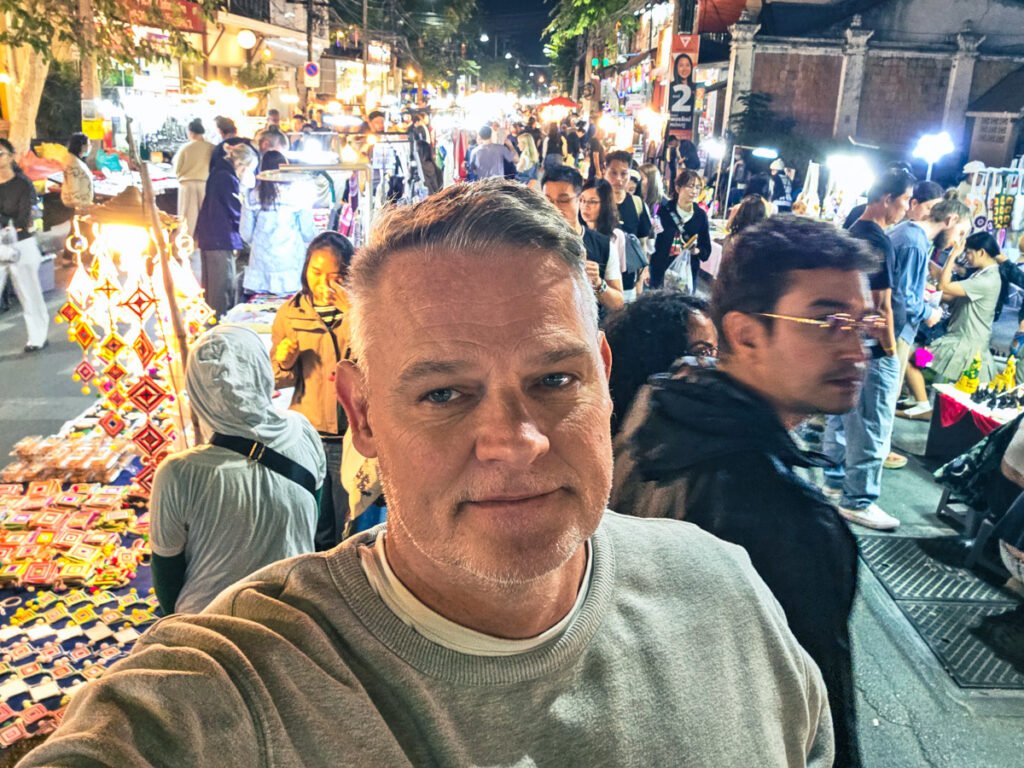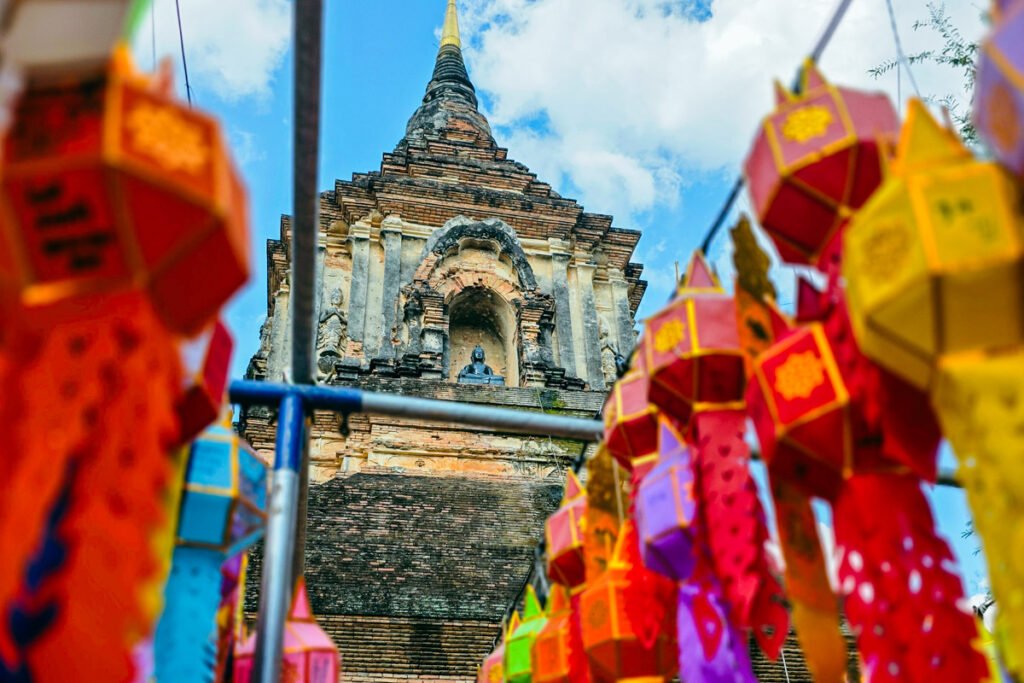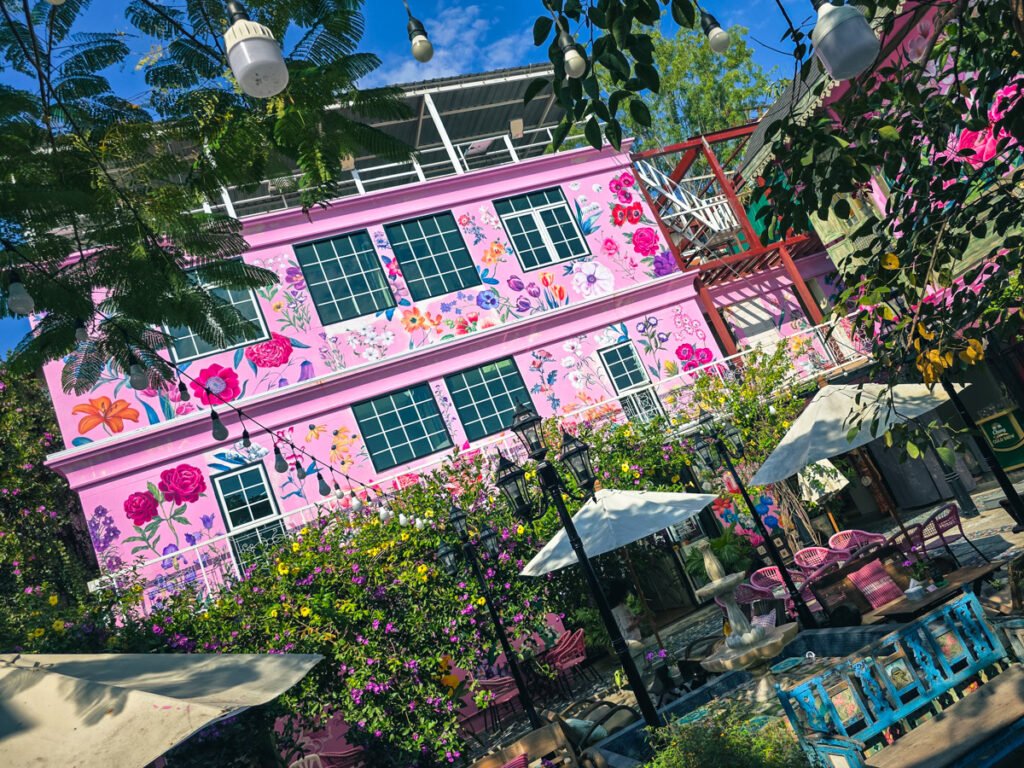
Chiang Mai is often framed as a starter city for digital nomads.
Cheap rent. Fast Wi-Fi. Cafés everywhere. And a strong digital community.
And that framing isn’t wrong — it’s just incomplete.
Because Chiang Mai changes depending on who you are when you arrive.
And if you come back later in life, it reveals a very different value.
In Your 30s, Chiang Mai Is a Launchpad
When you’re younger, Chiang Mai feels practical.
It’s a place to:
- Learn how to live abroad
- Reduce expenses
- Experiment with work
- Meet people quickly
- Build momentum
Everything is about acceleration.
More connections. More projects. More movement.
You notice the cafés, the co-working spaces, the affordability.
You measure the city by how much it enables you to do.
That’s not wrong — but it’s only one layer.
After 50, the City Stops Being a Tool
Something shifts later in life.
You’re no longer trying to prove that location independence works.
You’re not chasing optionality for its own sake.
You’re less interested in optimizing every variable.
And Chiang Mai quietly meets you there.
Instead of asking, “What can I build here?”
You start asking, “How does my life feel here?”
That’s when the city opens up.
The Value Moves From Speed to Sustainability
After 50, energy becomes something you protect, not something you spend freely. That change is part of a broader shift in nomad life after 50.
Chiang Mai supports that without asking questions, especially when you allow yourself to live slowly in Chiang Mai instead of treating it like a base to optimize.
You can:
- Walk instead of rushing
- Eat well without turning it into discipline
- Work in focused windows instead of long stretches
- Be social without constant exposure
The city doesn’t push you toward intensity.
It supports continuity.
That’s a very different metric of success.
You Stop Needing the Scene
In your 30s, community often means proximity:
co-working spaces, events, meetups, shared ambition. And yeah, Saturday night drinks at the Zoe in Yellow.
Later, community becomes optional — not central.
Chiang Mai allows you to:
- Drift in and out of social circles
- Be anonymous without isolation
- Keep your independence intact
You’re not required to participate to belong.
That’s rare.
Health Becomes Lifestyle, Not a Project
This is where Chiang Mai really separates itself later in life.
Movement happens naturally.
Food is simple and consistent.
Stress lowers without effort.
You don’t need:
- Extreme routines
- Perfect discipline
- Constant motivation
The environment does part of the work for you.
And after 50, that matters more than enthusiasm.
The City Reflects You Back to Yourself
Chiang Mai doesn’t distract you.
It doesn’t overwhelm you with identity, ambition, or noise.
It gives you enough space to notice what you actually need now — not what once worked.
That’s uncomfortable for some people.
But for others, it’s exactly what they’ve been missing.
Why Many Nomads Leave — and Some Stay
People often say Chiang Mai gets boring.
What they usually mean is:
“It stopped feeding the version of me that needed stimulation.”
If you’re still chasing growth through intensity, the city will feel flat.
If you’re interested in longevity — in health, work, and independence — it quietly makes sense.
Final Thought
Chiang Mai doesn’t reward ambition the way it does in your 30s.
It rewards alignment.
And after 50, that tradeoff starts to look less like a compromise —
and more like clarity.