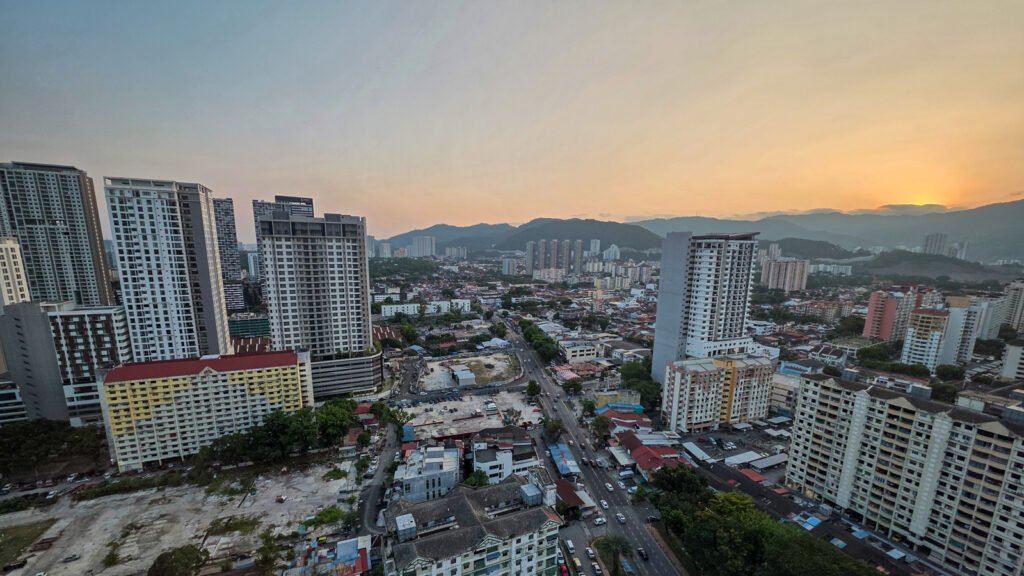
Some cities demand your attention.
They perform for you.
They sell themselves immediately.
Big landmarks.
Perfect viewpoints.
A list of things you’re supposed to see, try, and taste.
George Town doesn’t feel like that.
At least not to me.
George Town doesn’t open itself up all at once.
It doesn’t show you everything on day one.
It doesn’t push itself into your face.
It unfolds.
Slowly.
Piece by piece.
Street by street.
Corner by corner.
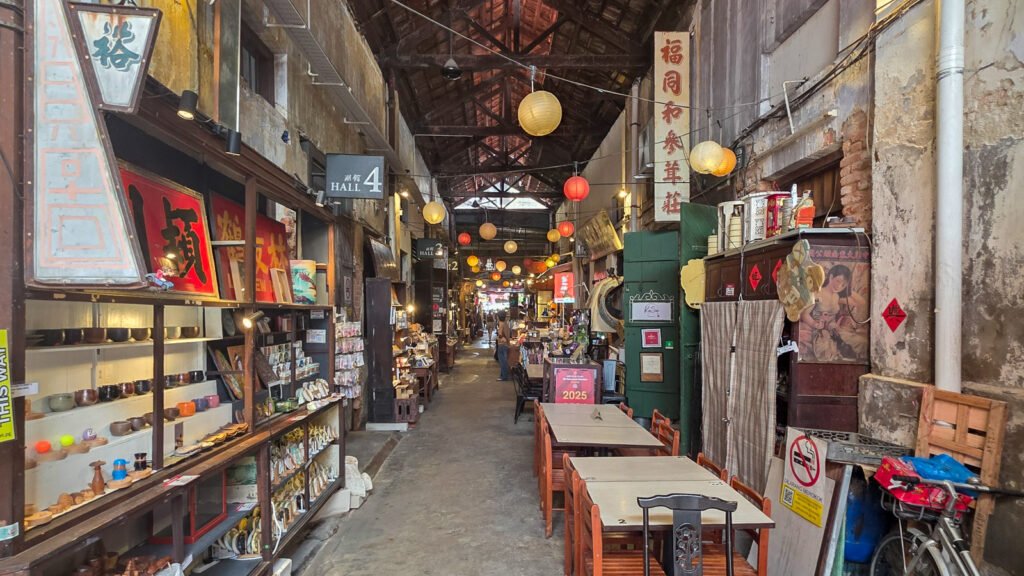
A market tucked between old buildings.
A vintage store hidden next to a mural that everyone else came to photograph.
A café behind a faded wall.
A quiet lane that suddenly feels more interesting than the main road.
That’s what I liked most.
Not the obvious parts.
The details.
The parts you find.
Not the parts you’re shown.
And maybe that’s why George Town feels different.
It doesn’t seem desperate to impress.
I found a very different version of that same feeling in Surat Thani, where the city seemed equally uninterested in whether I was impressed.
I wrote about why I chose not to stay in the UNESCO area here.
It just exists.
Old walls peeling in the heat.
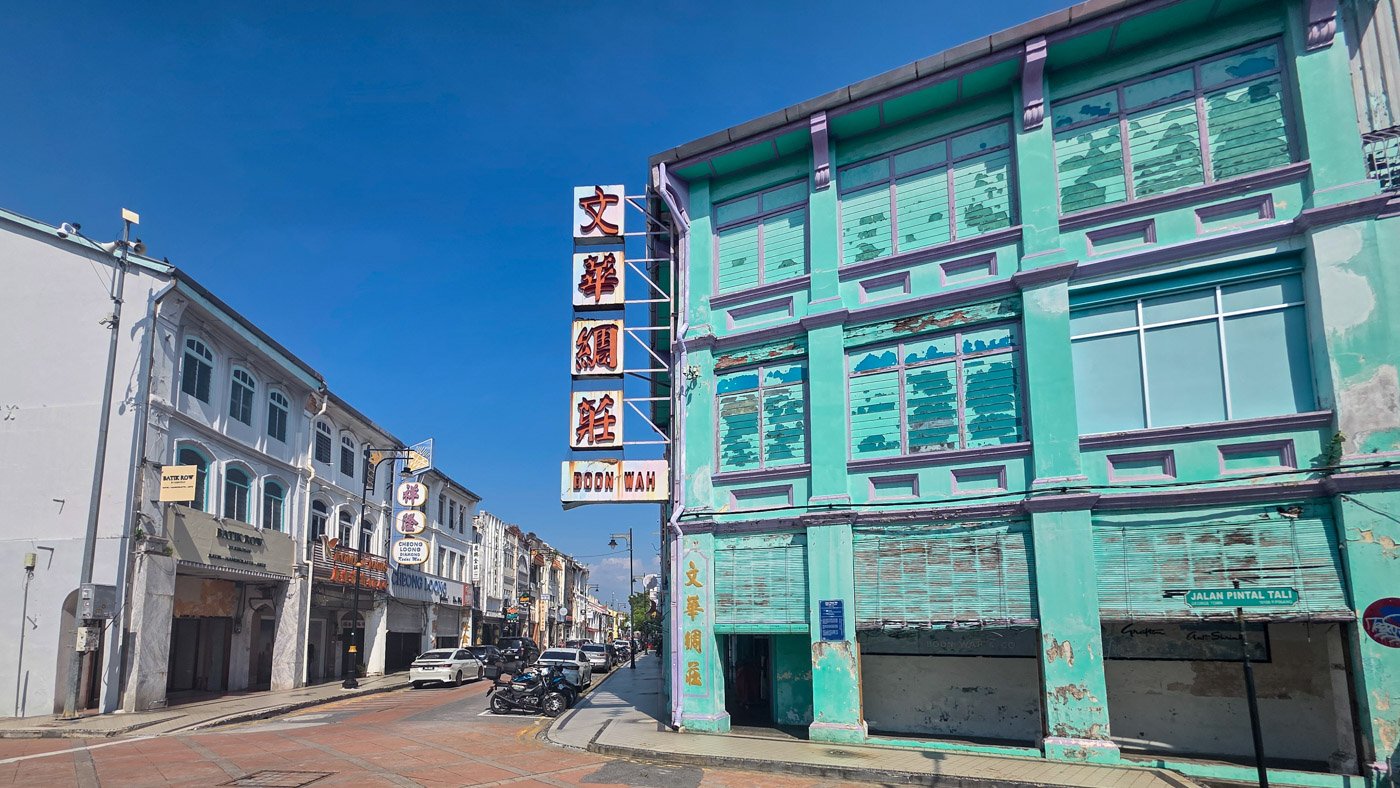
Street art blends into real life.
Scooters cutting through narrow streets.
Tourists taking photos.
Locals moving around them.
Business carrying on.
There’s history here.
But it doesn’t feel preserved under glass.
It still breathes.
It still moves.
It still works.
And the deeper I walked, the less it felt like a destination…
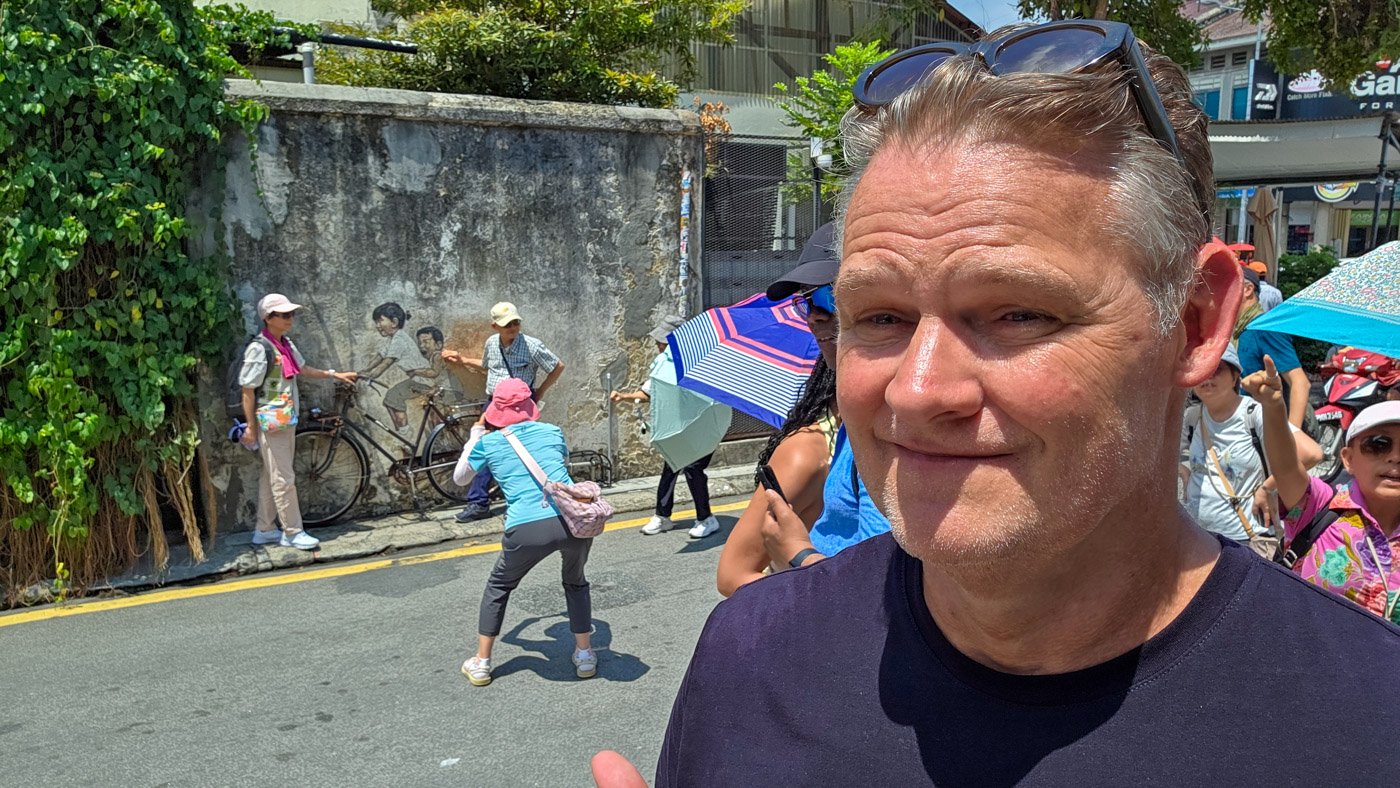
and more like a place.
That matters.
Especially now.
At this age, I’m less interested in places designed to entertain or control me.
More interested in places that reveal themselves.
Places with texture.
Places with contradictions.
Places where not everything is curated.
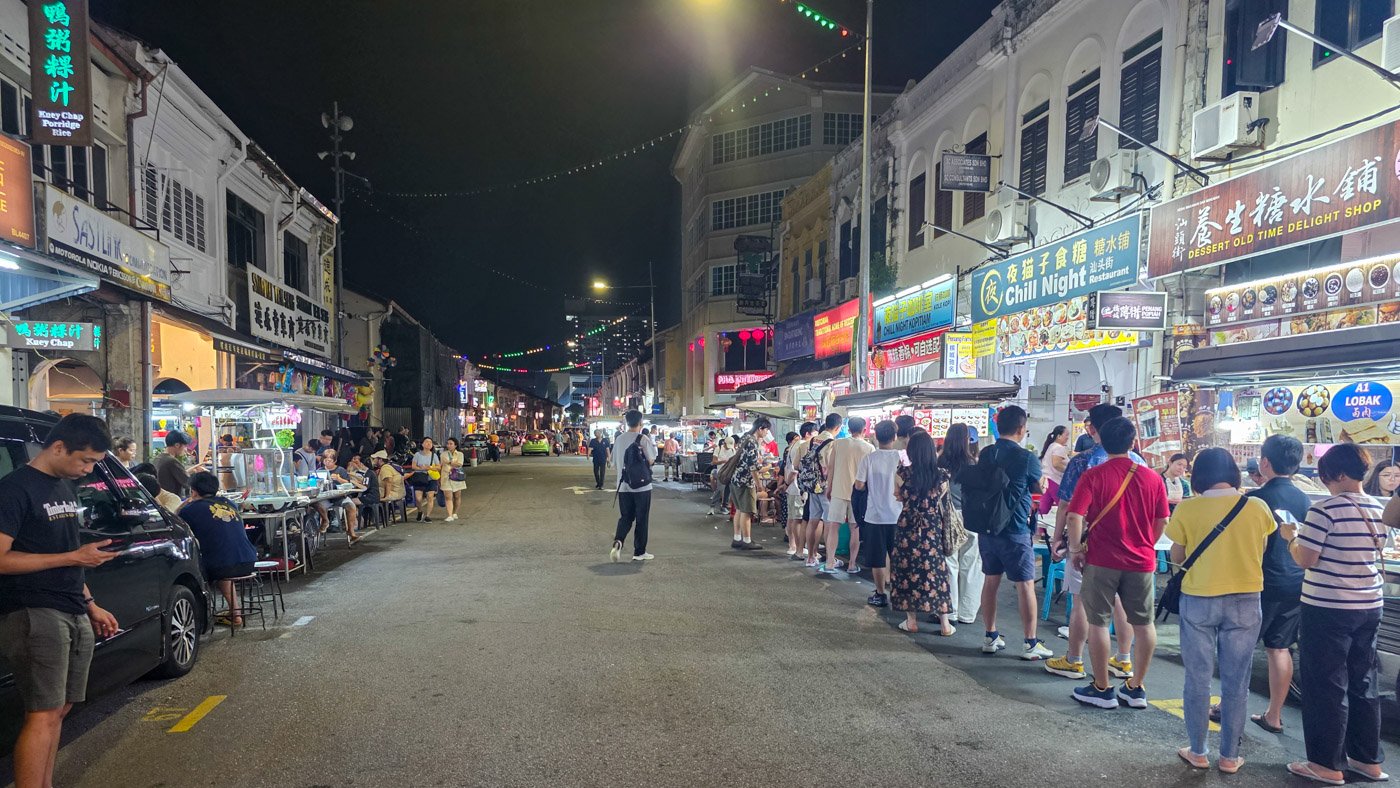
George Town has that.
It’s not loud.
Not flashy.
Not perfect.
And that’s one of the reasons I think George Town is worth visiting.
And maybe that’s exactly why it works.
The best parts of George Town aren’t obvious.
They’re found.
In side streets.
Markets.
Cafés.
Bars.
Old walls.
Quiet corners.
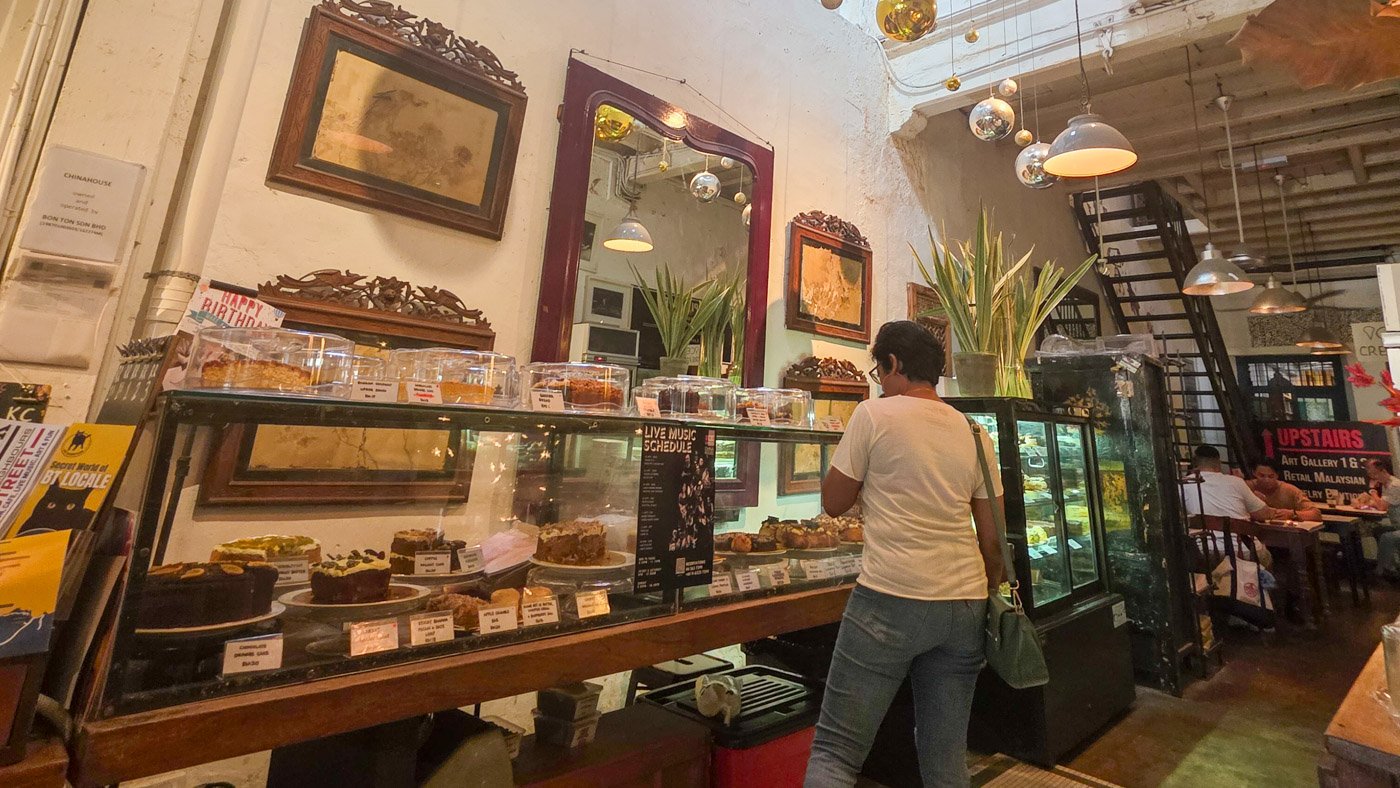
The city doesn’t perform for you.
You have to meet it halfway.
And if you do…
It slowly opens up.
Bali reminded me of a similar feeling I experienced in George Town…
You can find more of my Penang and George Town stories in the Places hub.